Launching a gummy candy product involves more than choosing a flavor and designing attractive packaging. Brand owners must evaluate product consistency, ingredient options, manufacturing capabilities, food safety practices, packaging flexibility, and delivery arrangements before committing to a supplier. A structured checklist helps buyers compare potential partners, reduce sourcing risks, and develop products that fit their target markets. When selecting a custom gummy manufacturer, buyers should assess both production capabilities and the supplier’s ability to support long-term brand development.
1. Define Your Product Concept and Target Market
Before contacting suppliers, clarify what the gummy candy should look like, taste like, and achieve commercially. Consider your target consumers, expected retail price, sales channels, and product positioning. A novelty candy aimed at convenience stores may require a different size, flavor profile, and presentation from a premium confectionery gift.
Prepare a product brief covering the desired shape, weight, texture, color, flavor, and packaging format. Reference images or samples can help communicate visual expectations. It is also useful to identify market-specific labeling requirements and consumer preferences before requesting quotations.
A clear brief allows manufacturers to assess feasibility and provide more relevant recommendations. It also reduces misunderstandings during sampling, product approval, and mass production.
2. Evaluate Customization Capabilities
Not every supplier can accommodate the same product requirements. Ask whether the manufacturer can adjust gummy shapes, sizes, colors, flavors, and packaging. Confirm which options are already available and which require new molds, formulation trials, or additional production costs.
When comparing custom gummy manufacturers, request samples that demonstrate their actual capabilities. Evaluate flavor accuracy, texture, appearance, and consistency between pieces. If your concept involves oversized or unusual shapes, ask about mold limitations, demolding, packaging protection, and whether the finished product can maintain its intended appearance during transportation.
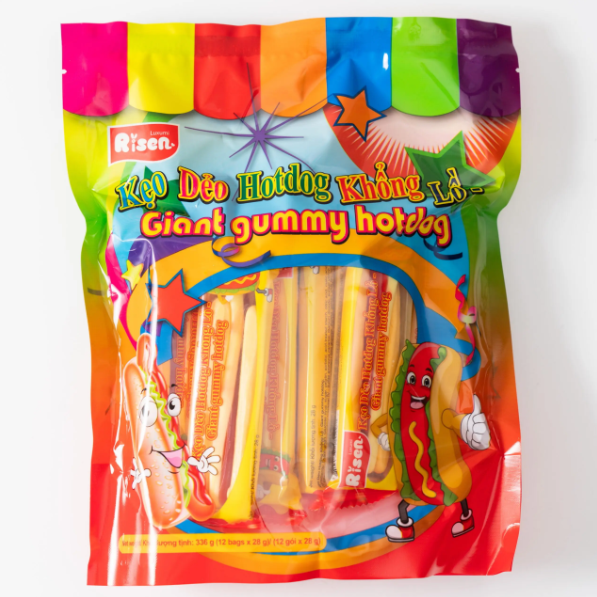
We support product customization through options such as our 28g Giant Hotdog Gummy Candy. The product features customizable fruit flavors, giving brand owners an opportunity to develop a distinctive novelty candy concept. Its specifications provide a practical starting point for discussing product presentation and packaging requirements.
3. Verify Food Safety and Quality Controls
Food safety should be a core part of supplier evaluation, not an afterthought. Ask about ingredient approval, production hygiene, allergen management, batch identification, quality inspections, and procedures for handling nonconforming products.
For products entering the US market, review which Food and Drug Administration requirements apply to the manufacturing facility and product. Covered facilities generally must follow applicable current good manufacturing practices and risk-based preventive controls, subject to relevant exemptions. These requirements address hazard analysis, sanitation, allergen controls, monitoring, and documentation.
Before placing an order, request relevant food safety documentation, product specifications, ingredient and allergen information, and available test records. Establish clear acceptance criteria for appearance, flavor, weight, packaging integrity, and defect rates. A written quality agreement can help both parties understand inspection responsibilities and corrective actions.
4. Check Packaging and Private-Label Options
Packaging influences shelf presentation, product protection, storage, and shipping efficiency. Confirm whether suppliers can accommodate branded bags, color boxes, printed labels, and other formats appropriate to your sales channels. Also ask about artwork requirements, printing lead times, packaging minimums, and approval procedures.
Our 28g Giant Hotdog Gummy Candy offers branded packing in either a bag or a color box. The listed net weight is 350g per bag, with 12 bags per carton, equivalent to 350g × 12 bags. These specifications give buyers a defined starting point for planning retail presentation and carton quantities.
One detail deserves clarification before production: the product name references 28g, while the listed bag net weight is 350g. Brand owners should confirm the individual gummy weight, the number of pieces per bag, and the final labeling details rather than assuming these figures describe the same measurement.
5. Confirm Minimum Orders, Pricing, and Lead Times
Commercial terms can determine whether a product concept is financially viable. Ask each supplier about minimum order quantities, sample fees, mold charges, unit pricing, payment terms, and shipping arrangements. Request a quotation that separates product costs from packaging, customization, and other applicable expenses.
A reliable sourcing plan should also account for production capacity and replenishment schedules. Confirm sample approval timelines, production lead times, order changes, and procedures for managing delays. When comparing custom gummy manufacturers, evaluate the complete cost structure instead of relying on the lowest quoted unit price.
For new brands, smaller trial orders may help validate consumer demand before larger commitments. However, minimum quantities and trial production availability must be confirmed directly with the supplier.
6. Assess Communication and Long-Term Partnership Potential
A supplier relationship extends beyond the first shipment. Evaluate how promptly the team responds, whether technical questions receive clear answers, and how efficiently feedback is incorporated into samples and production plans.
We encourage buyers to document product requirements, approved samples, packaging artwork, quality standards, and delivery expectations before confirming an order. Keeping these records helps maintain consistency when products are reordered or specifications change.
When assessing a custom gummy manufacturer for ongoing business, also discuss capacity expansion, new flavor development, and the process for approving future product variations. These conversations help establish whether the supplier can support your brand as its product range and distribution needs evolve.
Turn Your Gummy Concept into a Market-Ready Product
Choosing a gummy supplier requires a balanced review of customization, quality controls, packaging, costs, production schedules, and communication. By using this checklist, brand owners can compare potential partners against consistent criteria and identify questions that need answers before placing an order.
At HAPI, we work with buyers exploring distinctive confectionery concepts, including our 28g Giant Hotdog Gummy Candy with customizable fruit flavors and branded packaging options. Contact our team to discuss your product requirements, packaging preferences, and custom gummy sourcing needs.