Developing a successful gummy product starts with clear communication between brand owners and production partners. A detailed product brief helps translate creative ideas into practical manufacturing requirements, reducing misunderstandings during sampling, customization, and mass production. When working with a custom gummy manufacturer, we recommend preparing information about product design, ingredients, packaging, target market, and quality expectations before beginning the project. A well-structured brief allows both sides to align goals and create a smoother development process.
Define Your Product Vision Before Contacting Custom Gummy Manufacturers
A product brief should begin with the overall concept behind the gummy candy. Brand owners need to explain the purpose of the product, target customers, sales channels, and market positioning. Whether the goal is a seasonal novelty candy, a children’s snack, or a premium confectionery item, these details help manufacturers understand the direction of the project.
The brief should include the preferred gummy shape, size, texture, color, and flavor profile. Visual references, competitor examples, or existing samples can make communication more effective. Instead of only describing a product as “fun” or “unique,” provide specific details about appearance and consumer expectations.
When comparing custom gummy manufacturers, a clear product vision also makes it easier to evaluate whether a supplier has the right capabilities. Manufacturers can provide more accurate feedback on production feasibility, customization options, and potential challenges when they understand the complete concept.
Include Detailed Product Specifications and Requirements
A professional product brief should contain measurable specifications rather than general descriptions. Important details include product weight, ingredient preferences, flavor options, packaging format, and expected order volume. These elements allow manufacturers to estimate production requirements and prepare suitable samples.
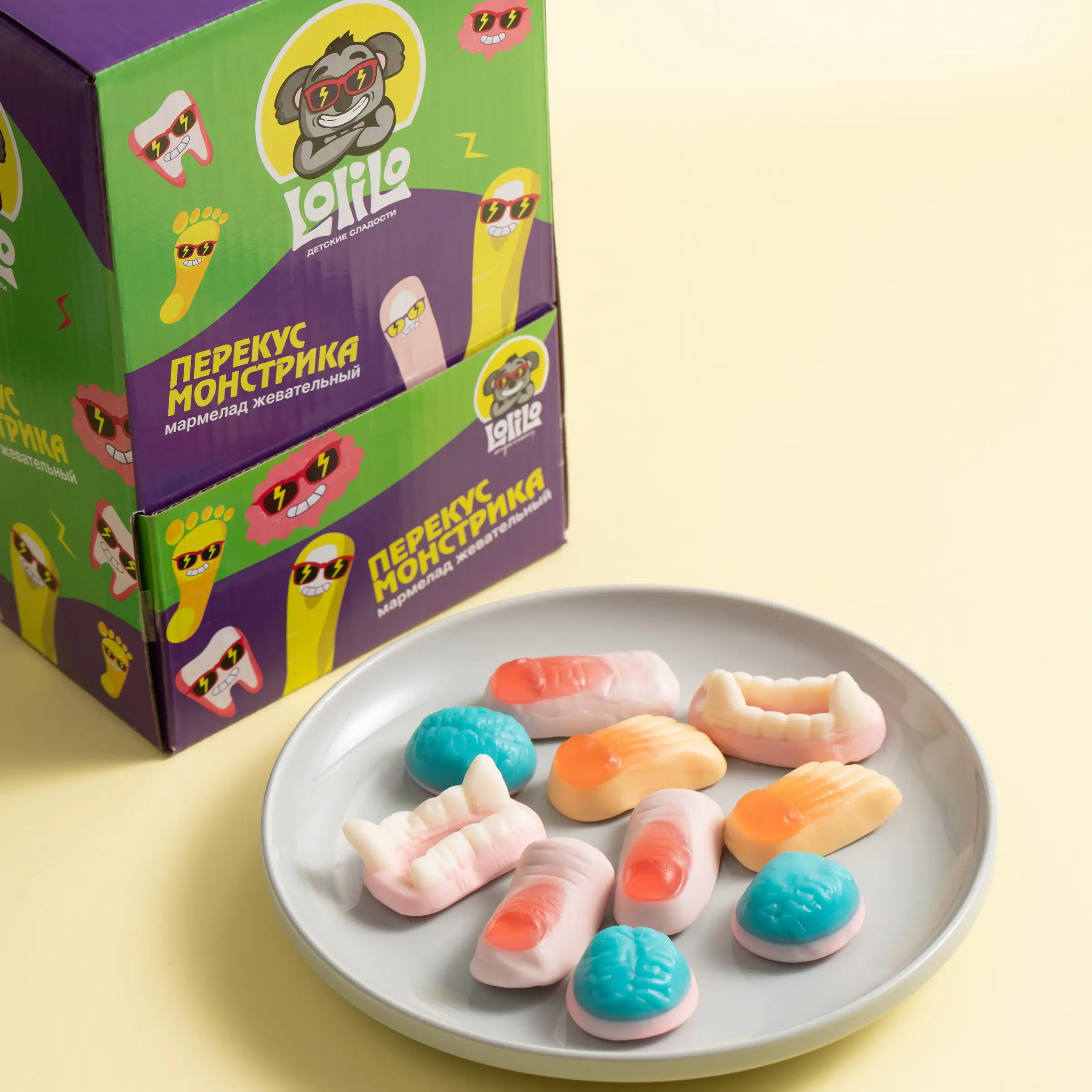
For example, our Halloween gummy with natural colors is designed for brands looking for a seasonal candy concept with a distinctive appearance. The product has a net weight of 350g per bag and is packed at 12 bags per carton (350g × 12 bags). The fruit flavors are customizable, allowing brands to adjust the taste profile according to market preferences.
The brief should also clarify whether the product requires specific ingredient standards, such as natural colors, particular sweeteners, or dietary considerations. Providing these details early helps avoid reformulation later in the development process.
Explain Packaging Expectations and Branding Needs
Packaging is an important part of a gummy product because it affects shelf appeal, protection, and customer recognition. A product brief should describe the preferred packaging style, dimensions, materials, and branding requirements.
Brand owners should provide packaging references, artwork guidelines, and information about retail requirements. If the product will be sold through supermarkets, online platforms, or specialty stores, packaging choices may need to support different display and logistics needs.
Our Halloween gummy with natural colors supports branded packing options in both bags and color boxes. Including these options in the initial discussion helps brand owners plan how the final product will appear in stores or online listings. Clear packaging requirements also allow manufacturers to prepare more accurate quotations and timelines.
Share Quality Standards and Compliance Expectations
A complete brief should explain the quality standards expected throughout production. Brand owners should consider factors such as gummy texture consistency, flavor intensity, color stability, product appearance, and packaging quality.
Before moving into large-scale production, discuss sample approval procedures and inspection requirements with your manufacturing partner. A reliable supplier should be able to explain how products are tested, how production consistency is maintained, and how quality issues are handled.
When selecting a custom gummy manufacturer, businesses should also review available certifications, food safety practices, and documentation procedures. These factors help ensure that the finished product meets market expectations and supports long-term brand reputation.
Provide Information About Timeline and Business Goals
Production planning depends on more than product specifications. A strong brief should include expected launch dates, sales forecasts, seasonal considerations, and estimated order quantities. This information helps manufacturers organize sampling, production schedules, and packaging preparation.
For seasonal products such as Halloween gummies, timing is especially important. Brand owners should communicate launch plans early because packaging development, sample approvals, and production arrangements require coordination between multiple teams.
Discussing future goals is also valuable when working with custom gummy manufacturers. If a brand plans to expand into additional flavors, shapes, or seasonal collections, sharing this information allows suppliers to consider future cooperation and scalability.
Build an Effective Collaboration Process with HAPI
A well-prepared product brief creates a foundation for efficient communication and successful product development. By organizing product ideas, technical requirements, packaging preferences, and business expectations in advance, brand owners can reduce delays and make better decisions throughout the manufacturing process.
At HAPI, we work with brands to develop customized gummy products that align with different market concepts and packaging needs. Our Halloween gummy with natural colors combines customizable fruit flavors with flexible branded packing options, including bags and color boxes. Contact us to discuss your gummy product ideas and create a customized solution with our team.