For retailers, distributors, importers, and candy brands, MOQ and lead time are practical planning numbers, not minor purchasing details. They affect launch budgets, inventory commitments, packaging schedules, and promotional timing. When working with a custom gummy manufacturer, buyers should understand what the minimum order covers, which project steps influence timing, and which specifications need approval before production begins. For a custom gummy manufacturer, these details are also useful when comparing quotations from different suppliers.
Why MOQ Matters for Custom Gummy Orders
Minimum order quantity exists because gummy production involves setup, ingredients, molding, packaging, quality checks, and other fixed activities. A manufacturer needs enough volume to run these steps efficiently while maintaining consistent output. For buyers, the useful question is not simply “What is the MOQ?” but “What does the MOQ represent in finished goods?”
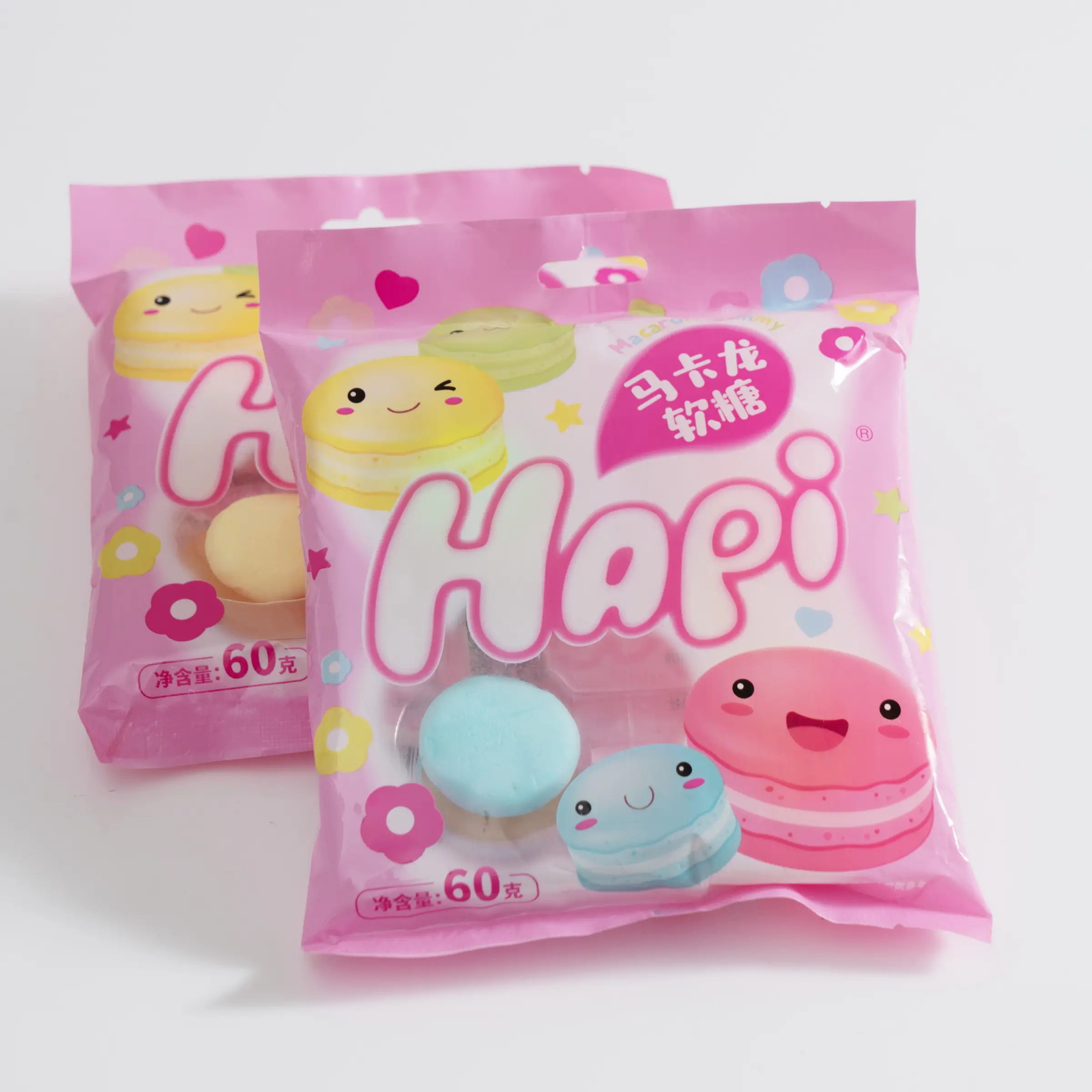
For our 60g Macaron Gummy Candy, the stated MOQ is 1,000 cartons, with each carton containing 12 bags of 350g. That equals 12,000 bags across the minimum order, or 4,200 kg of finished candy. This carton-level figure should be used when calculating warehouse space, freight requirements, working capital, and expected retail turnover.
OEM and ODM Requirements Can Affect the Schedule
MOQ and lead time can change when a buyer moves from a standard product to a more customized project. OEM work may involve branded packaging or other customer-specific requirements, while ODM can involve product development choices. For custom gummy manufacturers, the amount of development and approval work matters because production cannot simply start before the required details are confirmed.
Packaging is particularly important. Artwork, bag dimensions, carton information, printing specifications, and regulatory details all need to be aligned before packaging materials are ordered. For products entering the U.S. market, FDA explains that food labels must be truthful and not misleading, and most prepared foods require appropriate nutrition and allergen labeling. These checks can become part of the project schedule.
How Lead Time Is Built
A quoted lead time should be understood as a sequence rather than a single factory activity. Gummy production generally includes preparing ingredients, cooking the mixture, depositing it into molds, setting or drying, finishing, inspection, and packing. The recipe, gummy format, and drying requirements can influence how long production takes.
For our HAPI projects, we distinguish between ready-made and custom orders. Our published production guidance lists 7–10 days for ready-made products and 15–25 days for custom orders, with expedited options available for urgent needs. This gives buyers a useful planning reference, although the final schedule should be confirmed against the specific order requirements.
What Buyers Should Confirm Before Production
A professional purchasing brief for a custom gummy manufacturer should settle the product format, quantity, packaging, artwork, flavor or shape requirements, and delivery expectations before production is scheduled. Buyers should also confirm whether samples are required and whether sample approval is included in the timeline.
Regulatory preparation deserves attention as well. FDA states that facilities manufacturing, processing, packing, or holding food for U.S. consumption generally must register unless an exemption applies, while food offered in interstate commerce must meet applicable safety and labeling requirements. For importers, confirming documentation early can reduce avoidable delays.
Planning Around the HAPI MOQ
Our 60g Macaron Gummy Candy provides a concrete example of how MOQ can be translated into a purchasing plan. The supplied specification states 1,000 cartons per order and 12 bags of 350g per carton, so the calculated minimum is 12,000 bags or 4,200 kg. Because the product title specifies 60g while the carton specification states 350g per bag, buyers should verify the final retail and carton configuration with us before placing an order.
The same principle applies to other custom projects. Instead of comparing custom gummy manufacturers only by a headline MOQ, buyers can ask what is included, whether the MOQ applies per flavor or design, how packaging quantities are handled, and whether future reorders use the same threshold. These details make supplier quotations easier to compare on an equivalent basis.
Build a More Predictable Launch Schedule
Lead time becomes easier to manage when buyers separate development, approval, production, packing, and logistics into clear milestones. Customization can add work before manufacturing, while packaging or regulatory revisions can affect the final schedule. A realistic purchasing plan therefore leaves room for approvals instead of treating the factory production period as the entire project timeline.
For distributors and retailers, this approach also connects production with sales planning. If the MOQ represents a substantial inventory commitment, the order should be matched with warehouse capacity and expected sell-through. This is especially important for seasonal promotions, where a late arrival can create a larger commercial problem than the production delay itself.
A Practical Path from MOQ to Delivery
Understanding MOQ and lead time helps buyers turn a gummy concept into a workable procurement plan. HAPI‘s 60g Macaron Gummy Candy has an MOQ of 1,000 cartons, while our published guidance places custom-order production at 15–25 days. For buyers comparing custom gummy manufacturers, the key is to confirm the exact product, packaging, approvals, and schedule together rather than treating MOQ and lead time as isolated numbers. We work with business customers through OEM and ODM options to align these details before production.