Colorful gummies may look simple, yet their texture, flavor, and shape depend on a carefully controlled production process. From ingredient preparation to final packaging, every stage affects how the candy performs during storage, transport, and retail display.
Understanding these steps helps buyers assess bulk gummy candy suppliers, compare manufacturing capabilities, and recognize the quality controls behind consistent confectionery products. At HAPI, we view manufacturing knowledge as an important part of helping business customers understand how gummy products move from formulation to finished goods.
Ingredient Selection and Formula Development
The manufacturing process begins with selecting ingredients that create the intended texture, sweetness, color, and flavor. Sugar and glucose syrup commonly provide sweetness and contribute to the candy’s structure, while gelling agents determine whether the finished product feels soft, elastic, or firm. Gelatin and pectin are two widely used options, each offering different textural characteristics and processing requirements.
Moisture content also deserves attention during formulation. Excess water can affect shelf stability and texture, whereas insufficient moisture may produce gummies that feel too firm or develop an undesirable surface. Manufacturers therefore adjust ingredient proportions and processing conditions according to the intended recipe, target texture, and packaging requirements.
Flavoring and coloring require similar care. Fruit flavors, acids, and approved colorants must work together without compromising the desired sensory profile. Acidity can influence the behavior of certain gelling systems, so formula development involves more than simply mixing ingredients. Trial batches help production teams evaluate consistency before a recipe moves into larger-scale manufacturing.
Cooking, Mixing, and Texture Control
Once the recipe has been approved, ingredients are blended and heated under controlled conditions. Temperature and cooking time influence viscosity, moisture levels, and the final chew. Excessive heating can affect flavor and color, while inadequate processing may leave the mixture with inconsistent physical properties. Production teams monitor these variables to keep the candy mixture suitable for depositing into molds.
Mixing must distribute flavors, colors, sweeteners, and gelling ingredients evenly. Poor dispersion can create visible color differences or inconsistent taste between pieces. Industrial equipment helps maintain uniformity across large batches, although equipment settings must still match the specific formulation and desired product characteristics.
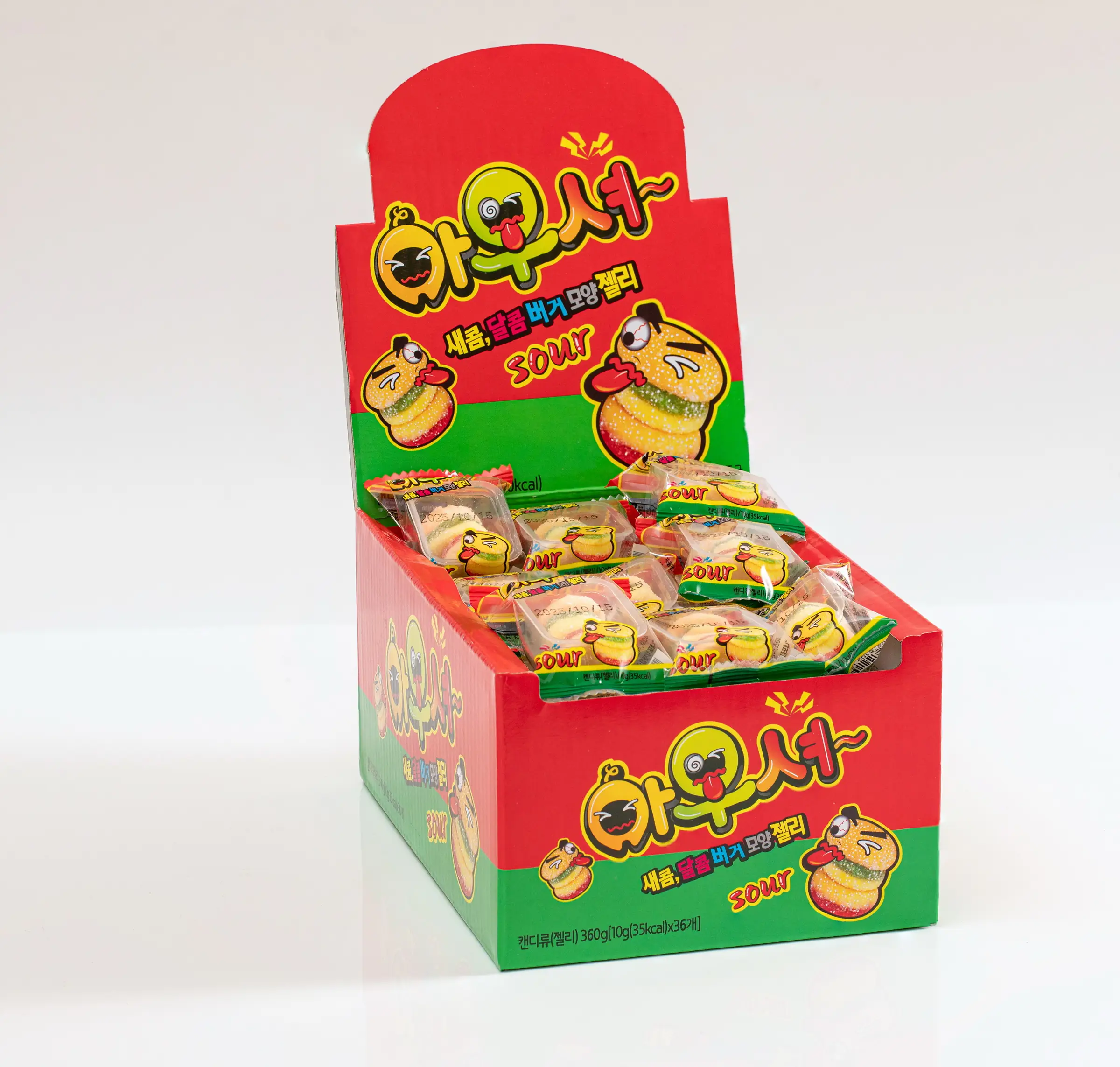
The depositing stage transfers the prepared mixture into molds that determine each piece’s shape and dimensions. Mold design becomes particularly important for novelty confectionery, where small details contribute to visual appeal. HAPI’s product listing for the 10g gummy burger with sour powder specifies customizable fruit flavors, Original Equipment Manufacturer (OEM) and Original Design Manufacturer (ODM) availability, and branded bag or color-box packaging. Its ordering details list 350g bags, 12 bags per carton, and a minimum order of 1,000 cartons. These packaging specifications describe the listed order configuration, rather than the individual gummy’s weight.
Setting, Drying, and Quality Inspection
After depositing, gummies need time to set. The required conditions depend on the gelling agent, recipe, and shape. Gelatin-based products develop their structure differently from pectin-based varieties, so production schedules cannot be applied identically to every formulation. Appropriate temperature and humidity management help the candy develop its intended consistency.
Drying or conditioning may follow molding, depending on the production method. During this stage, moisture levels and surface characteristics can change, affecting firmness, stickiness, and shelf stability. Excessive drying may make the candy too tough, while insufficient conditioning can leave it overly soft or prone to sticking. Manufacturers establish suitable conditions through product-specific testing.
Quality inspection then checks whether the finished pieces meet defined specifications. Common checks include appearance, weight, dimensions, texture, flavor, and packaging integrity. Food-safety procedures also address hygiene, traceability, ingredient handling, and contamination risks. Reliable gummy candy manufacturers maintain documented inspection procedures and investigate deviations instead of relying solely on the appearance of a finished batch.
Packaging, Storage, and Supplier Evaluation
Packaging protects gummies against moisture exchange, contamination, and physical damage during distribution. The appropriate material depends on the product’s characteristics, intended shelf life, transport conditions, and retail format. Seals should be checked carefully because damaged packaging can compromise product quality even when the manufacturing process itself has been well controlled.
Storage conditions also affect the experience consumers receive. High temperatures may soften certain gummies, while unsuitable humidity conditions can change their surface texture. Buyers should review the recommended storage instructions and shelf-life evidence for the specific product rather than assuming every gummy formulation behaves identically.
For businesses purchasing bulk gummy candy, supplier evaluation should extend beyond unit price. Buyers can request product specifications, ingredient declarations, allergen information, shelf-life documentation, sample batches, and details about the manufacturer’s quality management system. They should also clarify carton quantities, labeling requirements, production schedules, and procedures for handling defective goods before confirming an order.
Conclusion
Consistent gummy production depends on the relationship between formulation, processing conditions, inspection, and packaging. Understanding these stages gives confectionery buyers a practical basis for assessing product quality and communicating requirements to suppliers. Experienced gummy candy manufacturers should be able to explain how their processes address the needs of individual products, rather than relying on general claims about manufacturing capability.
At HAPI, we recognize that successful confectionery projects require both product creativity and a clear understanding of production requirements. We encourage business partners to review specifications, evaluate samples, and discuss packaging and customization needs before placing an order. With informed decisions at each stage, buyers can develop gummy candy assortments that better match their market, distribution plans, and customer expectations.