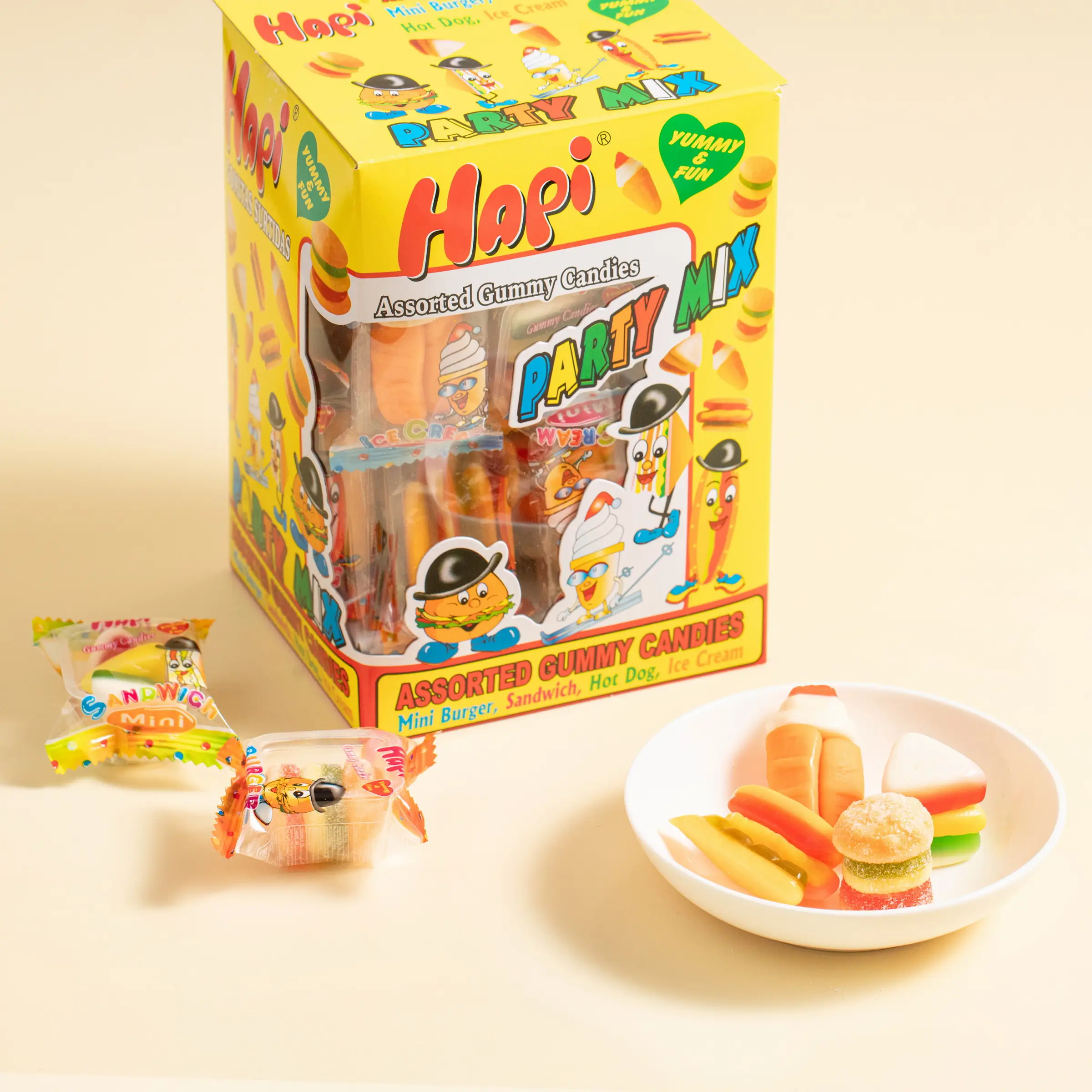
Chewiness is one of the defining features of gummy candy, yet achieving the same bite across thousands of pieces requires more than a consistent recipe. Small changes in moisture, ingredient ratios, cooking conditions, or cooling time can alter firmness, elasticity, and stickiness.
Gummies manufacturers need to understand these variables to develop products that feel consistent from one batch to the next. At HAPI, we recognize texture as a measurable production outcome shaped by ingredient science, process control, and careful evaluation.
How Ingredients Shape Gummy Texture
The texture of a gummy begins with its gelling system. Gelatin forms an elastic network that gives many gummies their familiar springy bite, while pectin creates a different structure whose firmness depends on acidity, sugar concentration, and the type of pectin used. These ingredients cannot always be substituted directly because each responds differently to processing conditions.
Sugar and glucose syrup also affect the final result. Beyond contributing sweetness, dissolved sugars influence solids content, viscosity, and moisture retention. If the balance shifts, the finished candy may feel softer, firmer, or stickier than intended. Acids, meanwhile, influence flavor and can affect how certain gelling systems behave during processing.
Ingredient specifications matter just as much as the formula itself. Differences in gelatin strength, pectin grade, or raw-material moisture can change how a mixture sets. Establishing clear ingredient standards helps a gummy candy manufacturers team between formulation issues and variations in incoming materials before adjusting the production process.
Why Cooking and Moisture Control Matter
Heating transforms a prepared mixture into a workable gummy mass. During cooking, water evaporates and the concentration of dissolved solids rises. If the mixture leaves the cooker with too much moisture, the gummies may remain soft or become tacky during storage. Excessive concentration, on the other hand, can create a firmer bite and make depositing more difficult.
Temperature must be interpreted alongside cooking time and formulation. A reading that works for one recipe may not suit another because sugar composition and gelling agents affect the mixture’s behavior. Process operators therefore need defined operating ranges rather than relying on appearance alone. Monitoring temperature, batch weight, and solids content provides a more reliable basis for adjustments.
Moisture control continues after cooking. The surrounding temperature, humidity, airflow, and duration of conditioning can influence how much water remains in the candy. Excessively rapid drying may create an undesirable surface texture, while insufficient drying can leave gummies prone to sticking. A gummies manufacturer should establish product-specific conditioning targets and verify that the candy reaches the intended texture before packing.
How Molding and Cooling Affect the Final Bite
Depositing determines how consistently the cooked mixture fills each mold. Differences in deposit weight can produce pieces with different dimensions, and size itself influences how quickly a gummy cools and sets. Accurate dosing, suitable mixture viscosity, and clean molds all help reduce visible variation between pieces.
Cooling gives the gelling system time to form its structure. If the temperature falls unevenly, pieces may set at different rates, creating variation in firmness or surface appearance. The cooling schedule must therefore suit the formula, mold design, and size of the product rather than follow one universal timetable.
Product design can make these requirements more complex. At HAPI, our 28g Cola Bottle Gummy Candy illustrates how a recognizable molded shape adds a design consideration alongside the expected chew. Narrow sections and thicker areas may cool differently, so the shape, deposit consistency, and setting conditions need to work together. This example shows why texture control involves both the candy formula and the physical form it must hold.
Measuring Texture Instead of Relying on Taste Alone
Sensory checks remain useful because trained evaluators can identify qualities such as springiness, chew resistance, stickiness, and mouthfeel. However, tasting alone may not reveal subtle differences between batches, particularly when samples are evaluated at different temperatures or after different storage periods.
Instrumental testing can make comparisons more objective. Texture analyzers measure responses such as compression force, deformation, and recovery after pressure is applied. These measurements do not replace sensory evaluation; instead, they help connect human observations with repeatable numerical results. Testing methods should remain consistent in sample size, temperature, conditioning time, and instrument settings.
Clear acceptance criteria make the results useful for production decisions. A quality team can compare current measurements with approved reference samples, investigate deviations, and determine whether a batch needs further assessment. For gummy candy manufacturers, recording both sensory findings and instrumental results builds a stronger picture of how formulation and process changes affect the finished candy.
Conclusion
Consistent gummy texture emerges from a connected series of decisions, beginning with ingredient selection and continuing through cooking, depositing, cooling, testing, and storage. No single temperature or ingredient ratio can control every formulation; reliable results depend on understanding how these variables interact and validating the process with repeatable measurements.
At HAPI, we view texture control as an ongoing practice of observation, testing, and refinement. By treating chewiness as a measurable quality attribute rather than a subjective impression alone, we can better understand batch variation and develop gummy products with a more dependable eating experience.