Turning a promising candy concept into a product that can be manufactured consistently at commercial volumes requires more than a successful recipe. Flavor, texture, shape, packaging, and production efficiency must work together, while every adjustment introduces new variables to control.
For fruit jelly candy manufacturers, scaling up means translating small-batch results into repeatable production without losing the sensory qualities that made the original concept appealing. At HAPI, we approach product development with attention to both consumer experience and the practical demands of manufacturing.
From Product Concept to a Production-Ready Formula
New candy concepts often begin with a target audience, a flavor direction, or a visual theme. Before a formula moves into large-scale production, the development team needs to define what the finished product should taste and feel like. Sweetness, acidity, aroma, firmness, and chewiness can all influence consumer perception, so these attributes should be described in measurable terms wherever possible.
Ingredient selection comes next. Different gelling agents respond differently to sugar concentration, acidity, and temperature, affecting both the texture and processing window. Fruit-derived ingredients may contribute flavor and color, but their composition can vary between suppliers and batches. Formulators must understand these differences before fixing the recipe.
Early trials should also consider manufacturing limitations. A mixture that performs well in a small laboratory vessel may behave differently in a larger cooking system, where heat transfer and mixing patterns change. Establishing acceptable ranges for key ingredients and process conditions gives the team a practical foundation for future adjustments.
Scaling the Recipe Without Losing Consistency
Increasing batch size changes the relationship between ingredients, equipment, and processing time. Larger volumes may heat and cool at different rates, while mixing efficiency can affect how evenly ingredients disperse. Simply multiplying every ingredient by the same factor does not automatically produce the same texture or flavor.
Pilot production helps identify these differences before a full commercial run. Teams can compare small-batch and pilot samples for viscosity, solids content, setting behavior, and sensory characteristics. If the results diverge, controlled trials can reveal whether the cause lies in the formula, equipment, or processing sequence.
Process records become increasingly valuable as output grows. Documenting cooking temperatures, batch duration, ingredient weights, and cooling conditions allows operators to compare successful runs with later batches. For fruit jelly candy manufacturers, this information supports repeatability and makes it easier to investigate deviations without changing multiple variables at once.
Managing Flavor and Texture at Higher Volumes
Fruit flavor can become less pronounced or feel unbalanced after processing, especially when heat exposure changes volatile aroma compounds. Acidity also affects how sweetness is perceived, meaning that increasing the sugar level is not always the best response to a flavor imbalance. Sensory testing should assess the relationship between fruit character, sweetness, and tartness rather than judging each element independently.
Texture presents a separate challenge. Excess moisture may contribute to softness and surface stickiness, whereas excessive moisture loss can make the candy too firm. The appropriate target depends on the product style, ingredient system, and intended storage conditions. Testing at several stages helps distinguish an immediate processing issue from a change that develops during storage.
Shape and piece size can influence the final result as well. Thick sections may set differently from thin sections, and variations in depositing can affect portion consistency. Commercial trials should therefore evaluate representative samples from different parts of a production run, rather than relying on one sample taken immediately after processing.
Designing Packaging for Commercial Distribution
Packaging decisions affect more than shelf appearance. Moisture transfer, exposure to air, light sensitivity, and handling conditions can influence product quality over time. The packaging material must suit the candy’s composition and expected distribution environment, with shelf-life testing used to assess whether the product retains its intended characteristics.
Pack size also shapes the commercial plan. Individual portions may suit impulse purchases, while larger bags can support sharing or multi-piece consumption. Teams should consider how consumers will use the product, how retailers will display it, and how the chosen format affects packing speed and shipping efficiency.
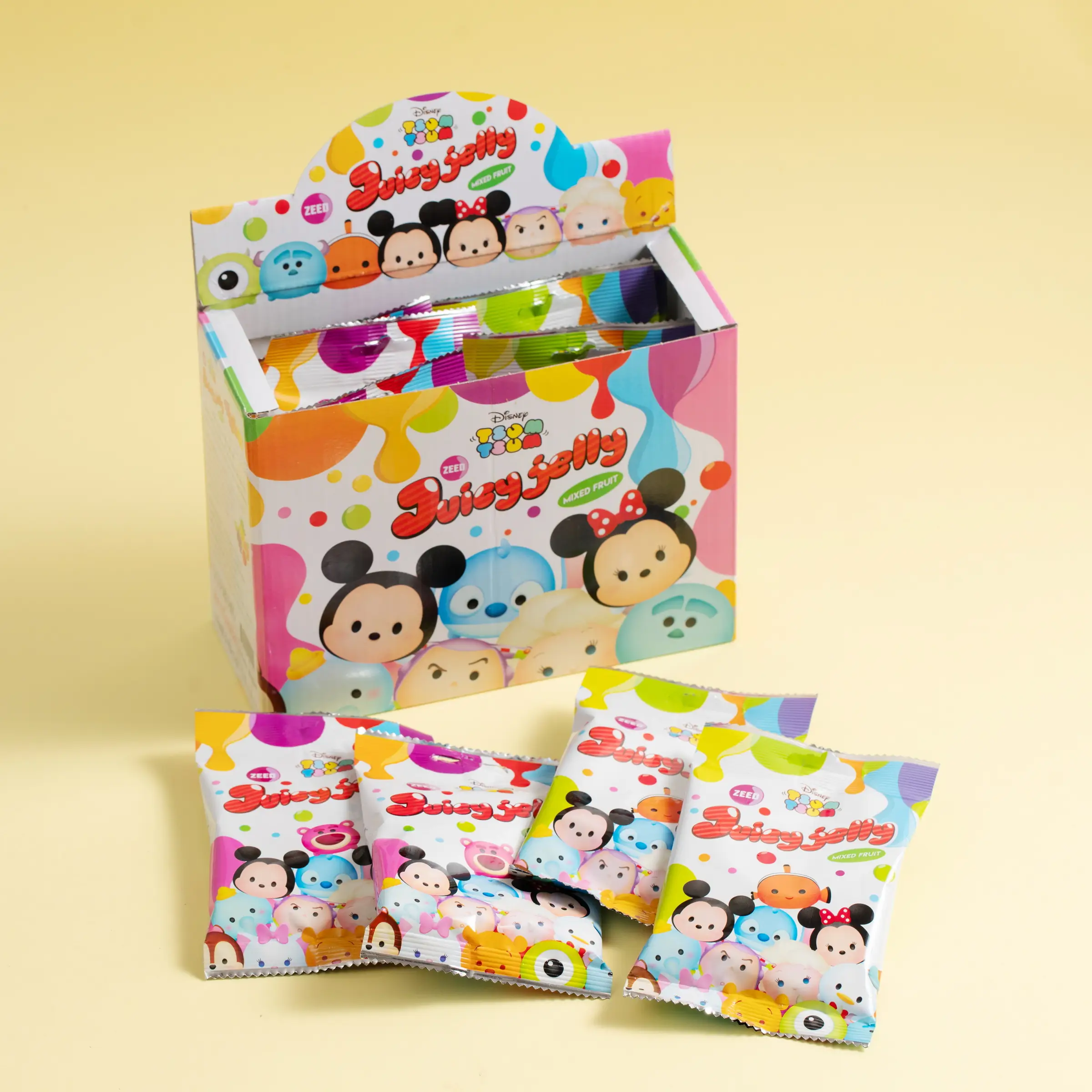
Our 30g Tsum Tsum gummy provides one example of how product format and flavor planning come together. The product information specifies customizable fruit flavors, with packaging listed as 12 bags per carton at 350g per bag. Those details illustrate why product specifications should be checked carefully during scale-up: the stated piece weight and bag weight describe different aspects of the offering and should be validated against the final packaging configuration before commercial release.
Building Quality Checks Into Every Production Stage
Quality control works best when checks are distributed throughout production instead of being reserved for the finished goods. Incoming ingredients can be assessed against specifications, while in-process checks monitor variables such as temperature, solids content, and deposit weight. Finished-product testing then confirms whether the candy meets its intended sensory and physical requirements.
Sampling plans need to reflect the size and variability of the production run. A single acceptable sample cannot establish that every carton meets the same standard. Teams can take samples at defined intervals and compare results across the beginning, middle, and end of production to detect changes that may otherwise go unnoticed.
Documentation also supports faster problem-solving. If a batch shows unusual firmness or inconsistent flavor, operators can review the relevant production records and compare them with previous runs. This evidence-based approach helps fruit jelly candy manufacturers identify recurring patterns, prioritize corrective actions, and refine process settings as demand increases.
Conclusion
Commercial scale-up is a sequence of informed decisions rather than a single jump from recipe development to mass production. Ingredient behavior, equipment performance, sensory evaluation, packaging, and quality checks all contribute to the outcome, and each stage provides information that can improve the next.
At HAPI, we view product development as a process of testing, learning, and refining specifications before wider distribution. With clear targets and reliable production records, fruit jelly candy concepts can move toward commercial readiness while retaining the flavor, texture, and appearance that define their appeal.