Behind the bright colors and chewy texture of gummy sweets lies a sequence of carefully managed operations, each influencing the final product in a different way. Temperature, moisture, ingredient compatibility, and packaging conditions all affect consistency from one production batch to the next.
Understanding these variables helps buyers assess a gummies manufacturer beyond its equipment or advertised capacity, especially when product quality must remain consistent across large orders. At HAPI, we believe that understanding the science behind confectionery production helps our business partners make more informed sourcing and product development decisions.
Cooking and Ingredient Preparation
The production process begins with precise ingredient preparation. Sugar and glucose syrup provide sweetness and influence the mixture’s body, while water supports dissolution and processing. Depending on the formulation, gelatin, pectin, or another gelling agent establishes the structure that gives gummies their characteristic chew. Each ingredient has its own functional role, so changing a formula may require adjustments to several processing parameters rather than a simple substitution.
Cooking transforms the prepared mixture into a workable confectionery base. Heat helps dissolve ingredients and reduce moisture to the intended level, but the required temperature and duration depend on the recipe and equipment. Excessive heating can affect color or flavor, whereas insufficient cooking may leave the mixture too thin or inconsistent. Production teams monitor these conditions to achieve the properties required for the next stage.
Mixing also determines how evenly flavors, acids, and colorants are distributed. Poor dispersion may produce noticeable differences between individual pieces, even if the overall batch uses the correct ingredients. Manufacturers therefore consider mixing speed, ingredient addition order, and the mixture’s viscosity. These controls become particularly important when several flavors or colors are produced on the same line.
Molding, Cooling, and Shape Formation
Once the mixture reaches the required consistency, depositing equipment transfers it into molds. The viscosity must suit the mold design: material that is too thick may fail to fill small details, while a mixture that is too fluid can make precise depositing more difficult. Accurate portioning also helps control the weight of individual pieces and reduce unnecessary variation across a batch.
Cooling and setting allow the gelling system to develop its structure. The time required depends on the recipe, the size of each piece, and the surrounding conditions. Larger gummies may need different handling from smaller shapes, particularly when the design contains several distinct sections. Production teams adjust the process to preserve the intended appearance and texture without rushing the setting stage.
Mold design also affects how easily finished candy can be released. Detailed shapes require suitable mold materials, surface conditions, and depositing accuracy. For buyers evaluating gummy candy manufacturers, questions about mold development and repeatability can reveal how well a supplier handles customized designs, particularly when a product needs to retain its recognizable shape throughout repeated production runs.
Quality Testing and Packaging Decisions
Inspection involves more than checking whether gummies look attractive. Manufacturers may assess piece weight, dimensions, color consistency, texture, flavor, and moisture content according to product specifications. Sampling plans and documented acceptance criteria help teams identify deviations before products move into distribution. Microbiological testing and other food-safety checks should be selected according to the formulation, manufacturing process, and applicable regulations.
Packaging decisions influence how the product withstands storage and transportation. Gummies can be sensitive to humidity, temperature fluctuations, and surface sticking, so packaging materials should suit the candy’s characteristics. Seal integrity matters as well: even a well-made product can deteriorate if moisture protection is inadequate or a package becomes damaged during handling. Transport and storage trials can help confirm that the selected packaging format protects product quality under expected distribution conditions.
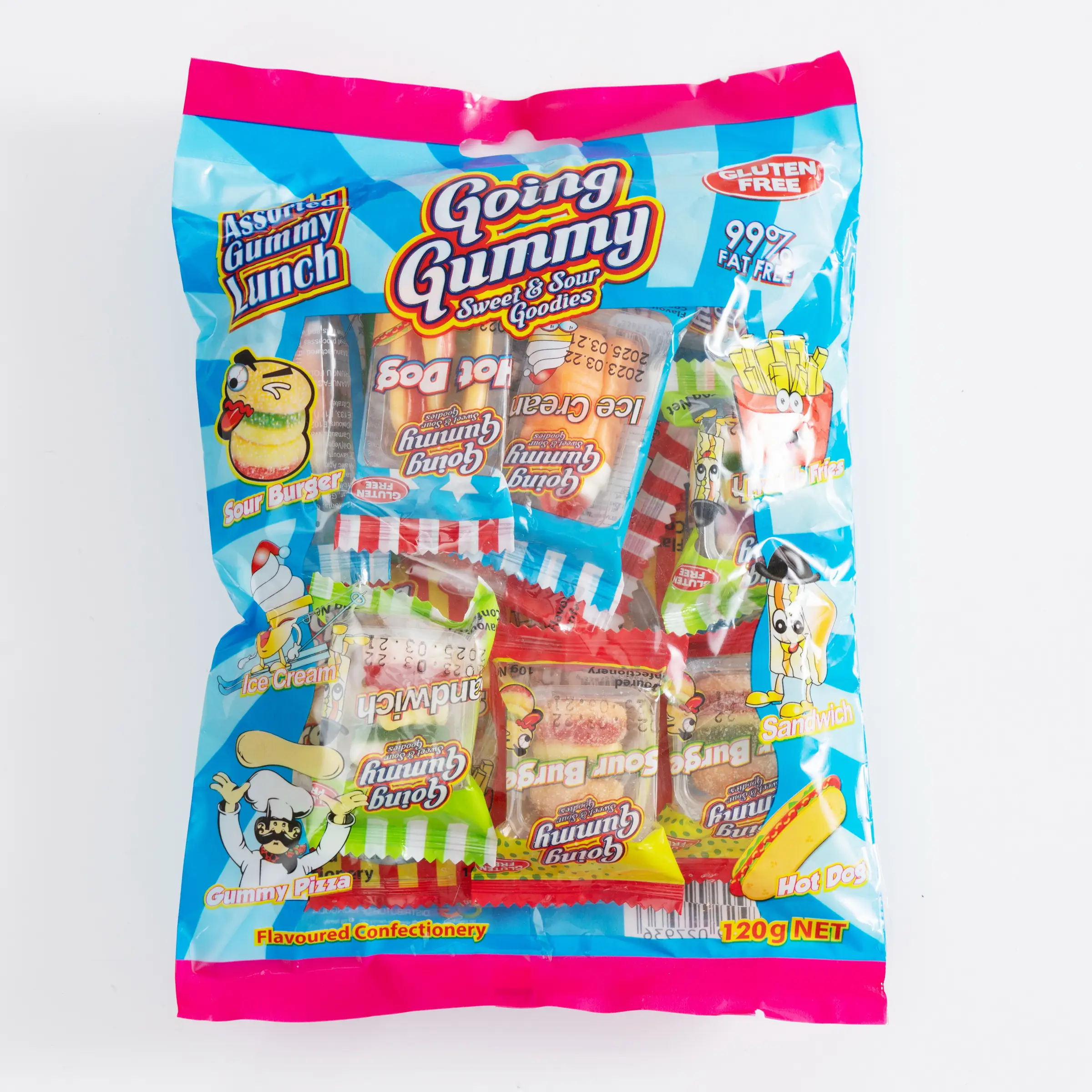
One example from our product range is the 120g Assorted Gummy Candy, listed on HAPI’s website with customizable fruit flavors, OEM and ODM options, and branded bag or color-box packaging. The page currently displays conflicting weight information: its product name states 120g, while the specification section lists 350g per bag, 12 bags per carton, and a minimum order of 1,000 cartons. We recommend confirming the current specification directly with our team before using these figures for purchasing or logistics planning.
Conclusion
Reliable gummy production relies on coordinated decisions rather than a single piece of machinery. Ingredient behavior determines the cooking conditions, formulation influences setting, and packaging protects the properties developed throughout manufacturing. Each stage contributes different information that buyers can use when assessing a supplier’s technical capability.
At HAPI, we work with business customers on gummy product development, customization, and packaging options. We encourage buyers to review samples, clarify specifications, and discuss production requirements before approving an order. A clear understanding of the process helps brands communicate their expectations, evaluate manufacturing proposals, and plan products around real distribution needs. Choosing a gummies manufacturer with transparent documentation and a well-defined production process can make collaboration more straightforward from initial development through final packing.