A candy sample may look appealing on arrival, yet its appearance alone cannot reveal how it will perform after weeks in storage or during international shipping. Buyers need to examine ingredients, texture, labeling, packaging, and batch consistency before approving an order.
Evaluating fruit jelly candy through a structured quality checklist helps purchasing teams identify risks early, compare suppliers objectively, and set clear expectations before production begins.
Verify Ingredients and Product Specifications
Start with the product specification sheet. It should identify the ingredient list, flavor profile, colorants, allergen information, piece weight, dimensions, and any relevant nutritional details. These records allow buyers to compare the delivered product with the approved sample and determine whether the candy meets their market’s requirements.
Ingredient declarations deserve particular attention. Fruit flavor does not necessarily mean that a product contains a high proportion of real fruit, so buyers should distinguish between fruit juice, fruit concentrates, added flavors, and other ingredients. Where fruit content matters to the product’s positioning or labeling, request supporting documentation instead of relying on product descriptions alone.
The agreed specification should also describe acceptable variation. Weight tolerances, color ranges, and texture expectations can be documented before mass production starts. For fruit jelly candy manufacturers, clear written requirements reduce ambiguity when buyers review samples, approve production, or raise quality concerns.
Assess Texture, Flavor, and Appearance
Sensory evaluation should cover more than sweetness. Buyers can assess fruit aroma, acidity, aftertaste, chewiness, firmness, and stickiness under consistent testing conditions. Comparing several pieces from the same sample helps reveal whether the experience remains uniform across the batch.
Visual checks provide another layer of information. Inspect the candy for uneven coloring, surface defects, distorted shapes, trapped air, or residue that may indicate processing or handling issues. Color differences are not automatically evidence of poor quality, but unexplained variation should be investigated against the approved sample and product specifications.
Texture should also be evaluated after the candy has been stored under defined conditions. Some defects become more apparent over time, including excessive hardening, moisture loss, or surface tackiness. Buyers should document observations and retain reference samples so later production lots can be compared with the original approval.
Review Food Safety and Compliance Documents
Food safety documentation is a core part of supplier assessment. Buyers should request applicable manufacturing certifications, product specifications, ingredient declarations, allergen statements, and relevant test reports. The exact documents depend on the product, manufacturing location, destination market, and buyer’s internal requirements.
Microbiological and chemical testing should reflect the product’s composition and risk profile. Depending on the formulation and applicable regulations, relevant checks may include microbial limits, contaminant testing, and verification of ingredients or additives. Buyers should confirm that reports relate to the actual product and a suitable production lot rather than accepting unrelated certificates as evidence.
Label compliance requires separate review. Ingredient lists, allergen declarations, net quantity, nutrition information, date marking, and importer details may be subject to specific local rules. Fruit jelly candy manufacturers should be able to provide accurate product information, while buyers remain responsible for confirming that the final label meets the requirements of their intended sales market.
Inspect Packaging and Shelf-Life Performance
Packaging protects the product against moisture changes, contamination, physical damage, and other environmental influences. Examine the material, seal quality, carton strength, and suitability for the expected distribution conditions. Even candy with acceptable initial texture may deteriorate if the packaging does not provide appropriate protection.
Shelf-life claims should be supported by relevant testing. Buyers can request information on the storage conditions, evaluation schedule, and quality attributes monitored during the study. Testing may examine changes in texture, color, flavor, odor, and microbiological quality, depending on the product’s risk profile and intended shelf life.
Transport testing can help identify weaknesses that laboratory storage tests may not reveal. Cartons may experience compression, vibration, temperature changes, and extended transit periods. A practical inspection should therefore include both the individual retail pack and the outer shipping carton, with particular attention to leakage, broken pieces, damaged seals, and unreadable labels.
Confirm Production Consistency and Order Details
Before placing a large order, buyers should confirm that the approved sample reflects the actual production specification. Record the sample version, agreed formula or specification reference, packaging artwork, and acceptance criteria. Any later changes should be reviewed and approved rather than introduced without notice.
Sampling during production provides an opportunity to detect variation before an entire order is packed. Depending on the order size and risk level, checks may cover piece weight, appearance, sealing, carton quantities, and label accuracy. A documented sampling plan makes the inspection more consistent and provides a clear basis for accepting or rejecting a lot.
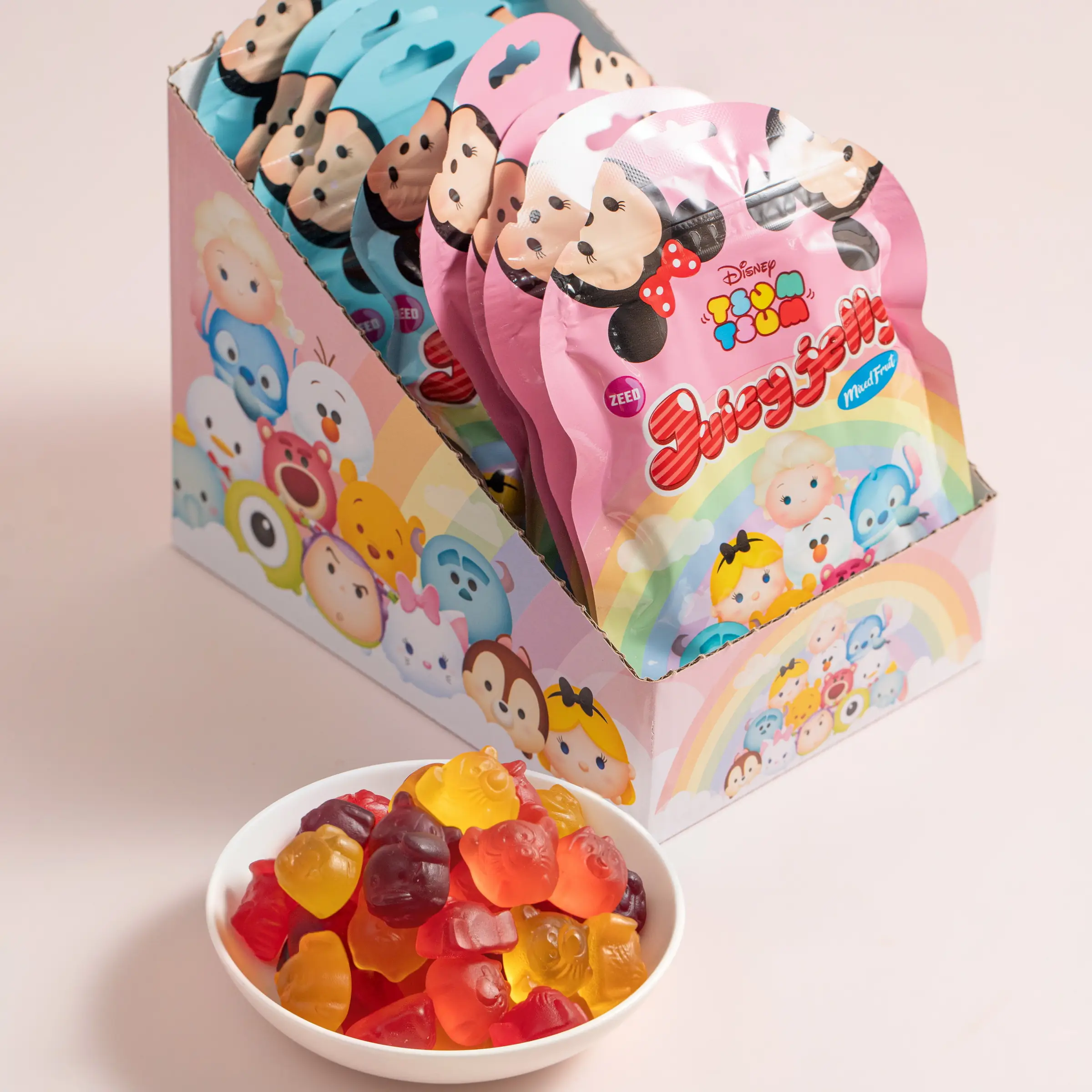
Commercial details also belong on the checklist because misunderstandings can affect product quality and delivery expectations. Our 56g Disney Tsum Tsum gummy, listed under fruit juice jelly, has a stated minimum order quantity of 1,000 cartons, with 12 bags of 350g per carton. Buyers considering this specification should confirm the relationship between the 56g product designation and the listed bag configuration, as well as the final packing details, before approving an order.
Conclusion
Reliable purchasing decisions depend on evidence gathered before, during, and after production. Ingredient records clarify what the candy contains, sensory checks reveal product characteristics, compliance documents address regulatory needs, and packaging and shelf-life reviews help assess performance beyond the factory.
At HAPI, we believe clear specifications and documented inspections create a more productive relationship between buyers and suppliers. Applying the same checklist to every order of fruit jelly candy makes comparisons more objective and helps purchasing teams identify questions that need answers before goods are shipped.