Choosing a manufacturing partner affects much more than the unit price of your gummies. For a growing candy brand, the right supplier should support product development, consistent production, packaging execution, food safety, and reliable communication. When comparing a private label gummy manufacturer, we recommend looking beyond catalogs and quotations. A structured review of capabilities can help buyers find a partner that fits both current launch needs and future product expansion.
Start With Manufacturing Capability
The first question is whether the supplier actually controls production. A dedicated gummy facility can give buyers greater visibility into processing, quality checks, and production scheduling than a company coordinating orders through unrelated facilities.
Ask where the gummies are produced, which processes are handled in-house, and how quality is monitored from raw materials through finished goods. Direct production control can also make communication about specifications and corrective actions more straightforward.
Review Customization Options
Private label projects usually need more than a standard gummy shape with a logo added to the package. Your product may require a particular flavor profile, shape, texture, color, pack size, or visual identity. A capable supplier should explain which elements can be customized and what minimum order quantities or development steps apply.
This is where private label candy manufacturers should be assessed for development flexibility as well as manufacturing capacity. Ask whether the supplier can create custom flavors and shapes, support branded packaging design, and coordinate the specifications needed to keep the finished product consistent with your brand concept.
Check Food Safety and Compliance
Food safety should be a core qualification, not an afterthought. If your products will enter the U.S. market, FDA rules apply to foods introduced into interstate commerce, and facilities that manufacture, process, pack, or hold food for U.S. consumption generally must register with FDA unless exempt.
Buyers should therefore request relevant certifications, registration information where applicable, quality-control procedures, and documentation for ingredients and finished products. ISO 22000 is a recognized food safety management system standard designed to help organizations control food safety hazards across the food chain.
Packaging and labeling also deserve careful review. FDA guidance notes that food sold in the United States must meet applicable labeling requirements, while regulations can change over time. Manufacturers should be able to provide the product information needed for your regulatory and label review rather than leaving compliance questions until shipment.
Evaluate Quality Consistency
A good sample proves that a supplier can make one successful batch. It does not automatically prove that the same specifications will be maintained across repeated orders. Ask how the manufacturer controls ingredient specifications, batch consistency, production parameters, packaging, and final inspections.
Define acceptance criteria before production begins. These can cover flavor, appearance, dimensions, texture, packaging details, labeling, and quantity. Clear specifications give both sides a practical reference when reviewing samples and finished goods.
Compare Total Cost, Not Just Unit Price
A lower quotation may not represent a lower total cost. Consider tooling, sampling, packaging setup, testing, freight preparation, minimum order quantities, and potential rework when comparing suppliers.
For overseas sourcing, production location can influence the commercial equation. A Vietnam gummy candy factory may offer manufacturing access and cost efficiency, but buyers should still evaluate lead times, export experience, payment terms, and scalability.
Assess Communication and Development Support
Private label projects often involve multiple rounds of samples, artwork revisions, specification confirmation, and production approval. A supplier that communicates clearly can reduce avoidable delays and misunderstandings.
Ask who will manage your project, how specifications are documented, how sample changes are approved, and how production issues are reported. Responsive development support matters when a product evolves through customer feedback.
Our Approach to Private Label Gummy Production
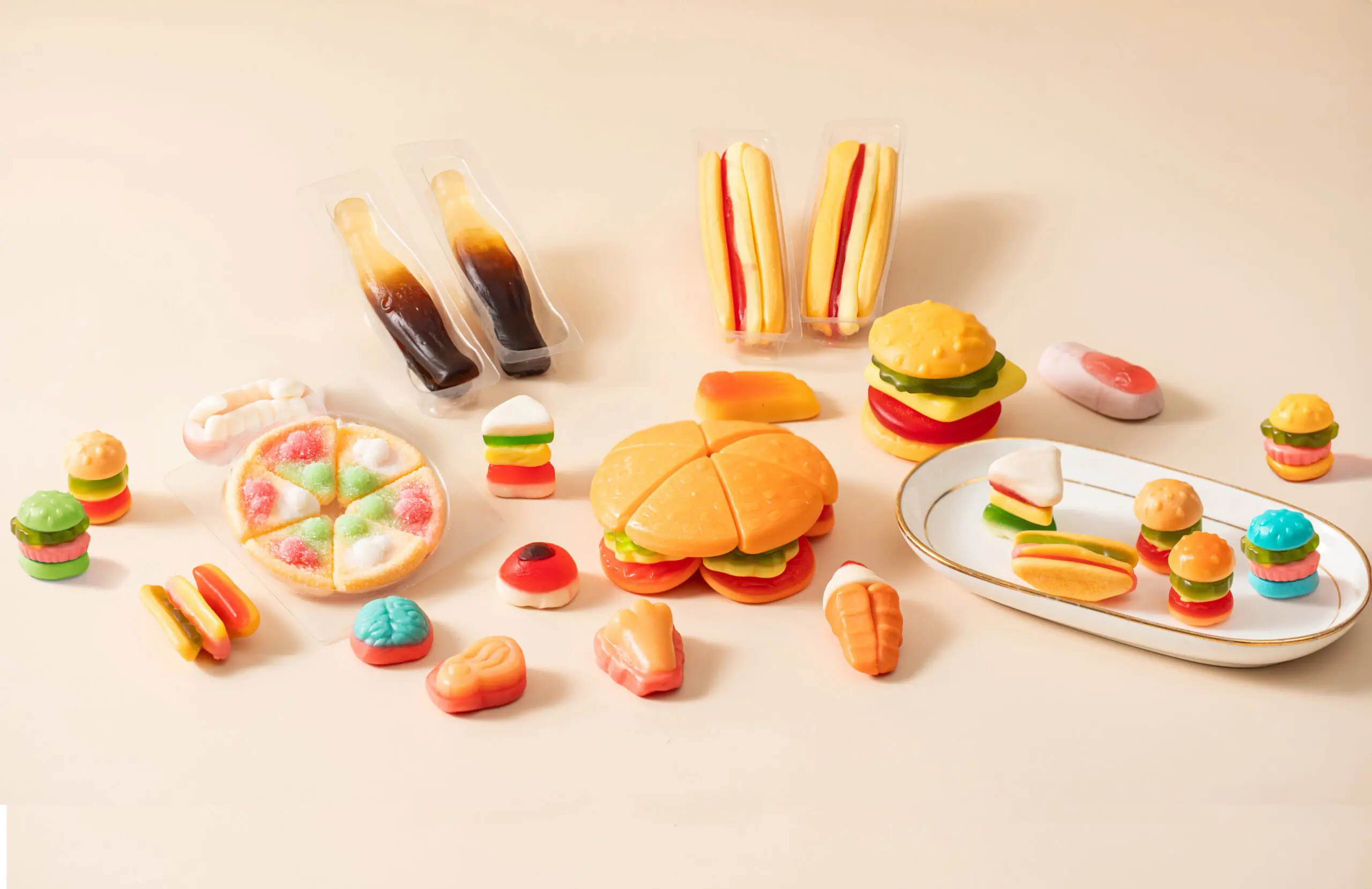
We operate our own gummy production facility in Vietnam as a certified jelly candy manufacturer, giving us direct involvement in production and quality control. We develop custom gummy candy solutions around the requirements of each brand, including custom flavors, shapes, and packaging.
We also provide branded packaging design support, helping buyers connect product presentation with their broader brand identity. Our production is designed around FDA/ISO-compliant requirements, supporting international customers that need structured quality and food-safety processes.
As a Vietnam gummy candy factory, we combine manufacturing capabilities with international market experience. For buyers comparing private label candy manufacturers, we believe direct production control, customization, documentation, and practical communication should all be considered alongside price.
Build a Supplier Checklist Before Ordering
Before placing a bulk order, we recommend creating a written supplier checklist. Confirm manufacturing location, customization capabilities, certifications and applicable registrations, sample approval procedures, packaging support, minimum order quantities, lead times, payment terms, and quality-control processes.
Then compare suppliers using the same questions and specifications. This makes it easier to identify gaps that a polished sales presentation may not reveal. It also creates a clearer basis for negotiating a supply agreement and defining responsibilities if a production issue occurs.
Make the Partnership Part of Your Brand Strategy
Choosing a private label gummy manufacturer is ultimately a sourcing decision with long-term brand implications. The right partner should be able to translate your product concept into repeatable production while supporting quality, compliance, customization, and commercial requirements.
We at HAPI bring these priorities together through our Vietnam-based gummy production facility, custom flavors and shapes, packaging capabilities, and international-oriented quality systems. For brands evaluating private label candy manufacturers, we welcome the opportunity to discuss your product specifications and develop a custom gummy candy solution that fits your market and brand goals.