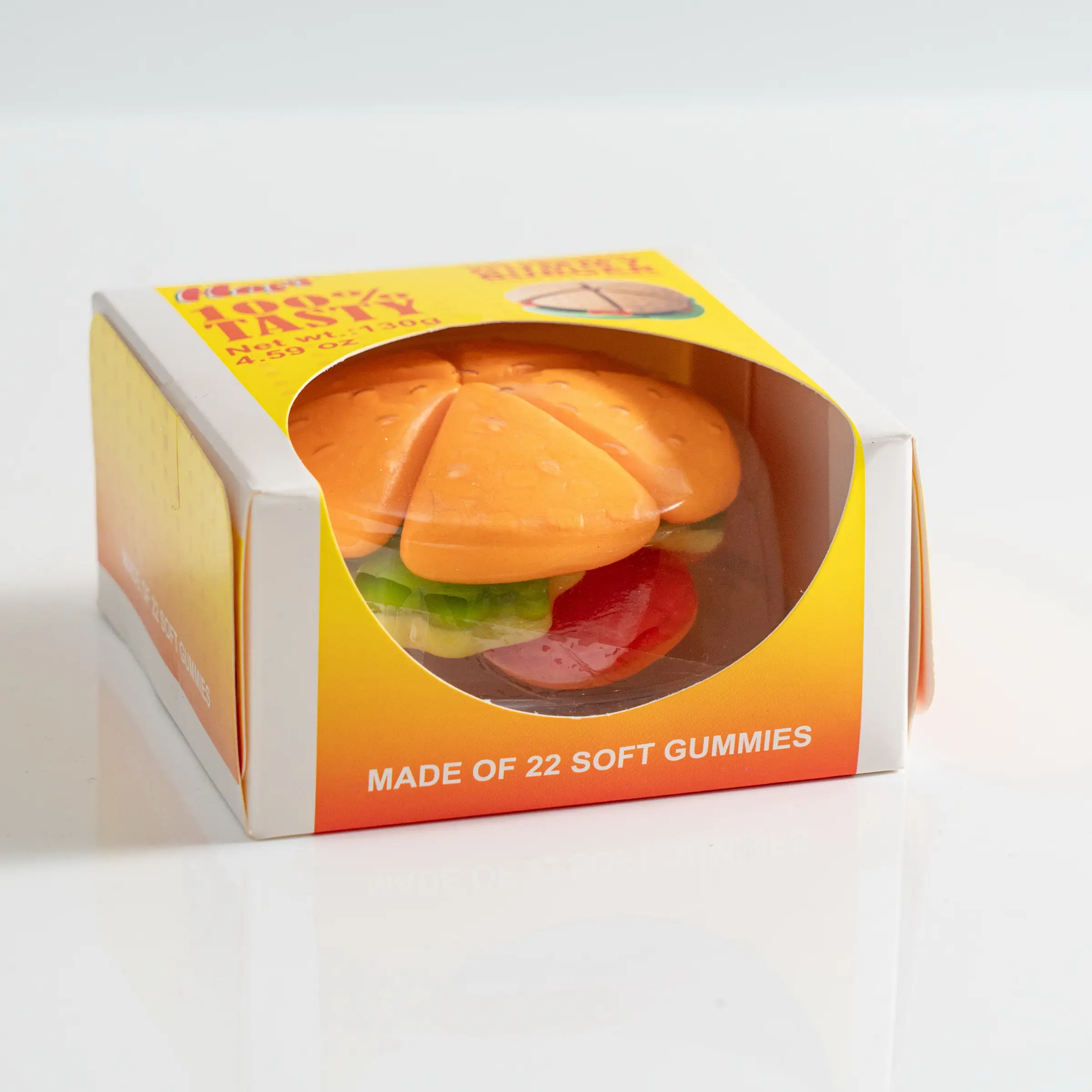
A candy’s quality is often judged before the first bite, as shoppers notice its outline, color balance, and surface appearance almost immediately. Hamburger candy adds an extra challenge to product evaluation because its food-inspired design needs to remain recognizable at a small scale while still delivering a pleasant eating experience. At HAPI, we consider visual consistency and sensory performance together, since attractive presentation is most valuable when the candy also meets practical expectations for texture, handling, and storage.
Examine Shape Definition and Proportion
The first inspection should focus on whether the intended shape is easy to recognize. For hamburger-inspired confectionery, the relationship between the rounded bun-like outline and the details representing fillings helps establish the visual theme. If these elements appear compressed, uneven, or poorly defined, the design may become difficult to distinguish when several pieces are displayed together.
Proportion matters just as much as the overall outline. Individual sections should look balanced rather than making one feature dominate the piece unintentionally. Buyers can compare several samples side by side, noting differences in height, width, symmetry, and the visibility of molded details. This approach reveals whether an attractive sample represents the broader batch or is simply an isolated example.
Inspection under ordinary retail conditions can provide additional insight. Strong shadows may make small details appear more pronounced, while flat lighting can hide shallow contours. Reviewing samples from multiple angles helps buyers judge how the shape will appear in a display, a transparent package, or a product photograph.
Check Color Consistency and Separation
Color affects both recognition and perceived quality. Distinct shades can visually separate the different parts of a food-inspired design, whereas subtle differences may become difficult to notice on a small piece. Buyers should check whether the colors appear intentional and consistent, rather than relying on a single photograph or sample viewed under unusual lighting.
Batch comparison is particularly useful when the product contains several colors. Samples from different packs can be placed together under the same light source, making variation easier to identify. Differences may result from formulation, ingredient characteristics, processing conditions, or storage. Recording observations gives the supplier a clearer description of any issue than a general comment that the candy looks inconsistent.
Color stability deserves attention after the initial inspection, too. Heat, light, moisture, and packaging conditions can affect appearance depending on the formulation. Buyers should review storage guidance and, where appropriate, examine samples after a period under realistic storage conditions. Food colorants must also comply with the regulations of the intended sales market.
Evaluate Texture Beyond the First Bite
Appearance provides limited information about how a gummy will feel when eaten. Texture assessment should consider initial firmness, chewiness, elasticity, and the way the candy changes during chewing. These characteristics influence whether the product feels consistent with consumer expectations and whether different pieces provide a similar experience.
Temperature and storage history can influence texture. Excessive warmth may soften some products, while unsuitable conditions can contribute to drying, surface changes, or sticking. For this reason, sample testing should take place under controlled conditions whenever possible. Comparing samples at similar temperatures reduces the risk of confusing temporary environmental effects with differences in formulation.
Review Product Information and Supplier Standards
Physical samples should be assessed alongside written specifications. Net weight, piece dimensions, ingredients, allergens, shelf life, storage instructions, and packaging configuration all help buyers determine whether the product suits their market. Clear documentation also makes it easier to compare samples from different manufacturers on a consistent basis.
Businesses evaluating hamburger candy should pay attention to how quality checks are conducted during production. Useful questions include whether dimensions and weight are monitored, how color variation is assessed, and what procedures apply when a batch falls outside agreed specifications. Buyers do not need to know every technical detail of the manufacturing process, but they should understand which characteristics are checked and how concerns are handled.
Communication with a wholesale candy supplier can clarify these practical points before an order is placed. Product samples provide evidence of appearance and texture, while specifications explain what the supplier intends to deliver across the order. Both forms of information are valuable; neither should replace the other when making a purchasing decision.
Build a Repeatable Evaluation Checklist
A consistent assessment process makes purchasing decisions less dependent on personal preference. Buyers can record shape definition, dimensional variation, color separation, surface condition, chewiness, adhesion, and packaging integrity. Each characteristic should be reviewed across several pieces, with notes distinguishing minor cosmetic differences from issues that may affect handling or consumer experience.
Reference samples and written acceptance criteria can improve consistency between inspections. For example, teams may agree on which shape details must remain visible or what level of variation warrants further review. Any thresholds should be established with the manufacturer and based on product specifications rather than arbitrary assumptions.
The same checklist can be used when evaluating later shipments. Comparing new samples against previously approved references helps identify changes over time and supports clearer discussions about quality. For our 120g assorted gummy candy listed in the Hamburger Candy category, buyers should confirm the current product specifications and carton configuration with our team before ordering, rather than assuming details that have not been verified.
Conclusion
A sound evaluation considers how shape, color, texture, and packaging perform together instead of judging appearance alone. Side-by-side comparisons, controlled sensory checks, and clear product specifications give buyers a more dependable basis for assessing confectionery quality.
At HAPI, we encourage customers to discuss product requirements and confirm order details before making a purchasing decision. Businesses working with a wholesale candy supplier can use a consistent inspection process to compare samples, communicate expectations, and make better-informed decisions about hamburger candy for their intended retail channels.