Selecting a supplier for wholesale gummies involves more than comparing product prices. Retailers, distributors, importers, and private-label brands need to consider food safety, product consistency, customization, packaging, order requirements, and supplier reliability. A structured checklist makes the evaluation process easier and helps purchasing teams identify potential risks before placing an order. When comparing gummy candy manufacturers, buyers should assess both the products themselves and the systems supporting their production.
1. Check Food Safety Certifications and Systems
Food safety should be one of the first checkpoints when evaluating a wholesale gummy manufacturer. A supplier should have documented systems for identifying and controlling food safety risks rather than relying only on final-product inspection.
ISO 22000:2018 specifies requirements for a food safety management system for organizations throughout the food chain. It uses a systematic approach to identify, prevent, and control food safety hazards.
FSSC 22000 builds on ISO 22000 together with sector-specific prerequisite programs and additional requirements. Its certification scheme is independently audited through licensed certification bodies. Buyers should therefore check the certification scope and current status instead of simply accepting a logo on a supplier’s website.
At HAPI, our manufacturing system is supported by FSSC 22000 and ISO 22000 certification. We also maintain Disney qualification and successfully completed a 2025 SEDEX audit. These credentials give business customers additional information when assessing our food-safety and responsible-manufacturing practices.
2. Evaluate Product Quality and Specifications
The next step is to determine whether the supplier can consistently manufacture products that match your commercial requirements. Ask about ingredients, flavor profiles, texture, shape, color, weight, shelf life, allergens, and packaging specifications.
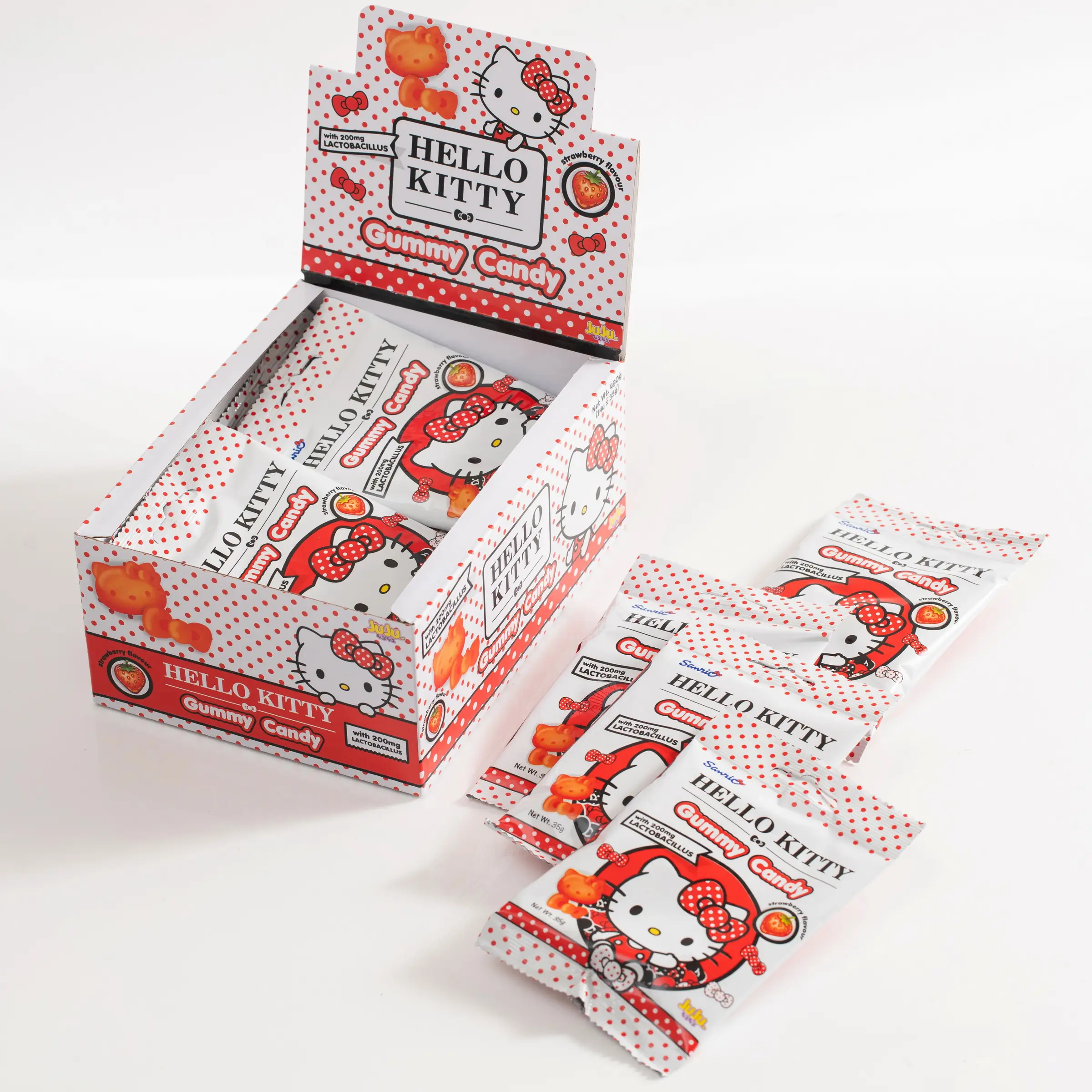
For example, our Hello Kitty fruit juice gummy is a 35g product containing lactobacillus. It is gelatin free and gluten free, uses no artificial colors, and is individually wrapped. These specifications should be reviewed alongside your target market and labeling requirements before commercialization.
When comparing gummy candy manufacturers, request product samples and compare them against documented specifications. Pay attention to texture, flavor consistency, appearance, packaging quality, and individual wrapping. A sample is useful not only for judging taste but also for determining whether the supplier can deliver the presentation your retail customers expect.
3. Confirm OEM and Private-Label Capabilities
Wholesale buyers often need products that align with an existing brand rather than standard off-the-shelf candy. Ask whether the supplier provides OEM, private-label, or other customization services, and clarify exactly which elements can be modified.
Important questions include whether the manufacturer can adjust product shapes, flavors, packaging, labeling, and other specifications. Buyers should also ask about artwork approval, sample development, packaging materials, and whether customization affects minimum order quantities or lead times.
We provide OEM and private-label services, allowing business customers to discuss market-oriented confectionery solutions. Our approach is designed around the buyer’s product requirements rather than treating every wholesale order as a standard catalog purchase.
4. Review MOQ, Pricing, and Production Capacity
Minimum order quantity is another essential checkpoint. A low unit price may not be commercially attractive if the required order volume creates excessive inventory. Ask whether MOQ applies per product, flavor, package, or design, and determine whether repeat orders have different requirements.
You should also request a detailed quotation covering product costs, packaging, tooling where applicable, shipping terms, and other potential charges. Compare quotations using the same specifications to avoid making decisions based on incomplete pricing.
A reliable wholesale gummy manufacturer should also explain its production capacity and expected lead time. This matters particularly for seasonal promotions, new product launches, and distributors that need regular replenishment.
5. Assess Responsible Manufacturing Practices
Food safety is only one part of supplier evaluation. International buyers may also need information about labor practices, workplace conditions, environmental management, and business ethics.
SEDEX’s SMETA methodology, for example, assesses areas including labor standards, health and safety, environmental performance, and business ethics, depending on the audit scope. Buyers should therefore ask what type of audit was completed, when it took place, and what scope was covered.
Our successful 2025 SEDEX audit forms part of the information we can provide when customers assess our responsible manufacturing practices. Combined with our food-safety systems and Disney qualification, this gives business customers several relevant points to review during supplier qualification.
6. Check Communication and Order Support
A manufacturer’s technical capabilities are important, but communication can also affect the success of a wholesale project. Ask who manages samples, quotations, artwork, production updates, quality questions, and shipping coordination.
Before selecting among gummy candy manufacturers, establish how specifications will be confirmed and how changes will be documented. Clear communication can reduce misunderstandings between purchasing, product development, marketing, and logistics teams.
It is also useful to ask how quality concerns are handled after delivery. Buyers should understand the process for reporting issues, providing evidence, investigating problems, and arranging appropriate follow-up. This becomes increasingly important when a supplier relationship develops into recurring wholesale orders.
Build a Practical Supplier Evaluation Process
Choosing a gummy supplier should involve more than comparing flavors and prices. Buyers should examine food-safety certification, product specifications, customization capabilities, MOQ, production capacity, responsible manufacturing practices, and communication processes. A documented checklist helps purchasing teams make comparisons using consistent criteria.
At HAPI, we combine OEM and private-label capabilities with food-safety and responsible-manufacturing systems to support customers seeking market-oriented confectionery products. For businesses evaluating a wholesale gummy manufacturer, we can discuss product requirements, packaging, customization, and supply arrangements based on the needs of each project.