Selecting ideal taste profiles involves understanding consumer sensory expectations along with natural volatile interactions during thermal processing. Chemical compounds responsible for citrus, berry, or tropical notes degrade at different rates when exposed to high heat during gel base cooking. Achieving a mouthwatering fruit flavored gummy candy requires food scientists to meticulously adjust organic acid ratios and aromatic oil formulations. Our flavor developers at HAPI continually evaluate how acidic compounds modify sweetness perceptions across distinct fruit bases.
Chemistry of Natural and Synthetic Aromatics
Essential fruit flavorings consist of esters, aldehydes, and terpenes that easily evaporate under standard industrial cooking temperatures. Organic food chemists isolate natural juices using gentle cold-press extraction to protect delicate botanical volatiles from heat-induced oxidation. Hydrophobic essential oils demand emulsifiers to distribute evenly throughout water-heavy gel matrix bases before setting occurs.
Synthetic flavor alternatives provide high thermal stability and consistent batch profiles across long storage cycles. Ester compounds imitate isoamyl acetate for banana or ethyl butyrate for pineapple notes with high accuracy. Formulators often blend natural juice isolates with stable synthetic terpenes to achieve cost efficiency while maintaining authentic fruit aromas.
Matrix binding forces influence how quickly aromatic flavor notes release in human mouth conditions during chewing. Gelatin networks hold lipid-bound aromatic esters tightly, creating delayed sensory responses compared to pectin bases. Carbohydrate structures release sweet notes instantly upon contact with human saliva enzymes during mastication.
Balancing Organic Acids and Sweetness
Fruit taste profiles depend heavily on balancing citric, malic, and tartaric acid compounds with base syrup sugars. Citric acid provides immediate sharp tartness that elevates bright citrus profiles such as lemon, lime, and grapefruit. Malic acid delivers smooth, lingering acidity that enhances orchard fruits like apple, peach, and cherry.
Sugar solids mask harsh acidic notes while amplifying natural botanical aromatics across chewing cycles. Glucose syrup reduces sucrose crystallization risks and maintains translucent visual clarity in finished pieces. Brix levels must stay tightly controlled to protect overall water activity without softening structural chewiness.
High acid concentrations weaken polysaccharide networks, which often causes gel melting during high-humidity shelf storage. Syneresis happens when acidic fluids break polymer linkages, leading to moisture weeping on product surfaces. Buffering salts like sodium citrate stabilize pH levels during deposit phases without altering fruit taste perception.
Sensory Impact of Layered Fruit Combinations
Blending multiple fruit notes requires careful balance to ensure distinct sensory stages during mastication. Top notes like strawberry or raspberry strike instantly on tongue receptors, while base notes like mango provide long-lasting sweetness. Food designers structure flavor release speeds by combining oils with varied evaporation thresholds.
Tropical fruit concepts pair naturally with sharp berry profiles, creating complex flavor profiles that engage consumer palates. Passion fruit and guava oils contain high volatile ester counts, making them effective accent ingredients in complex flavor formulations. Subtler flavors like pear serve as effective structural bases that smooth out aggressive citrus sharpness.
Consumer flavor preferences vary significantly across international markets based on regional fruit availability and traditional confectionery recipes. European markets tend to prefer tart, botanical berry profiles with reduced sugar content. Asian consumers frequently seek floral orchard fruits with delicate sweetness and soft chewy textures.
Industrial Flavor Injection Methods
Adding aromatic compounds late in cooling pipelines reduces thermal loss during high-speed candy production. In-line injection systems blend delicate flavor emulsions directly into cooked gel masses right before deposit nozzles. Experienced fruit jelly candy manufacturers rely on continuous mixing technology to achieve precise ingredient dispersion without introducing unwanted air bubbles into starch molds.
De-aeration vacuum chambers remove trapped air bubbles that degrade clear aesthetics and oxidize volatile aroma oils over time. Oxygen exposure degrades delicate ester molecules, leading to off-flavors after extended storage durations. Automated sensors continuously track volumetric dosing precision across high-volume production lines.
Starch drying rooms remove excess moisture under controlled humidity and temperature conditions to lock in aromatic compounds. Proper conditioning hardens outer surfaces, forming a protective barrier that seals in delicate aromatic volatiles. Maintaining environmental humidity controls stops sticky surface sweating during curing phases.
Enrichment Innovations and Texture Coatings
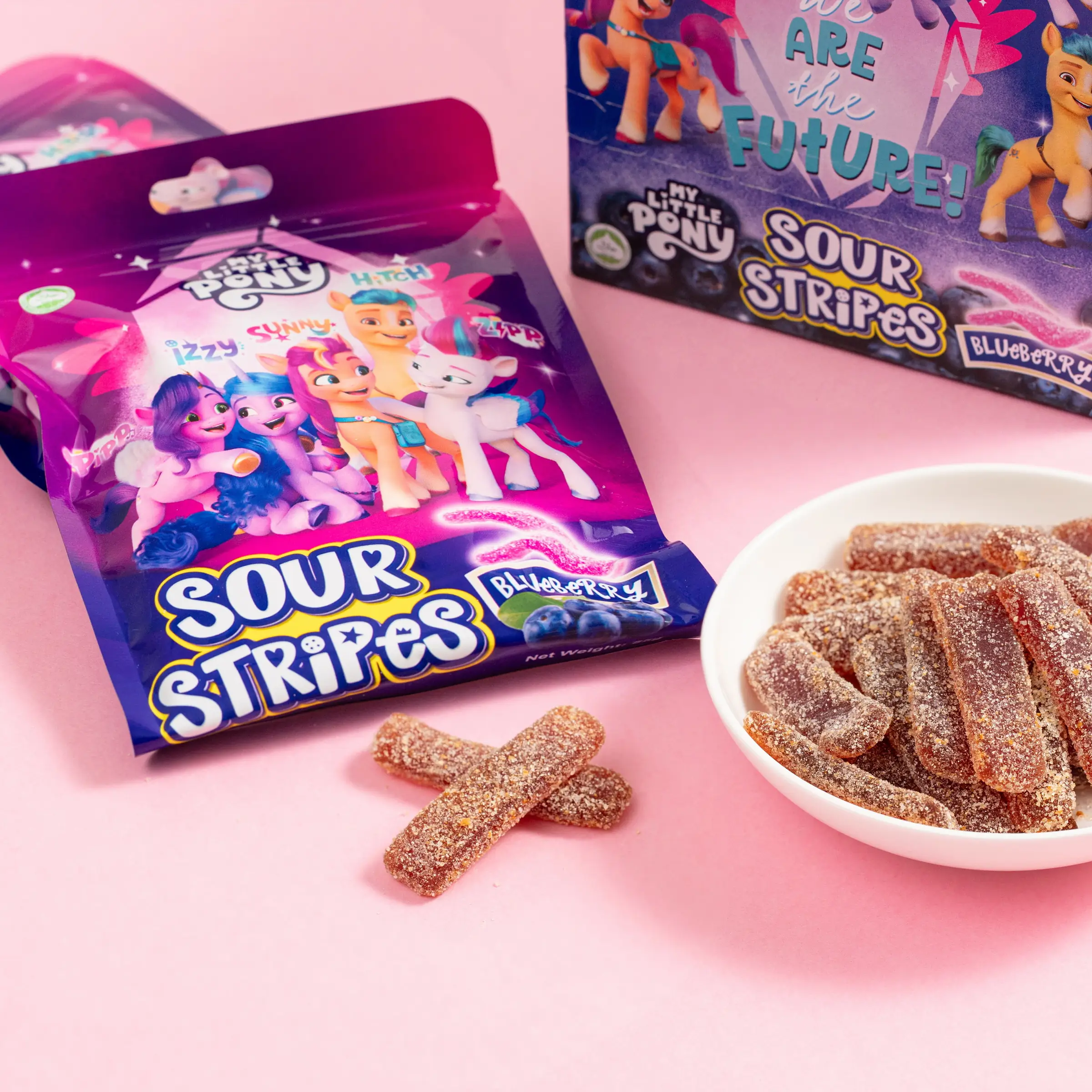
Specialty additions provide distinct taste sensations while delivering added nutritional value in modern confectionery formulations. Formulated variations like Gummy sour stripes with Vitamin C pair vitamin-fortified candies with intense, mouth-watering sour dustings. We package these fortified treats in 350g per bag formats, providing stable moisture protection that preserves both active nutrients and crisp surface textures throughout transit.
Sour dustings combine encapsulated organic acids with coarse sugar granules to create immediate tactile and sensory contrast upon chewing. Encapsulation prevents surface acids from absorbing ambient moisture, which stops protective coatings from dissolving inside sealed bags. Outer sour layers fade quickly, revealing smooth, sweet fruit gel bases beneath.
Micro-encapsulation techniques safeguard light-sensitive vitamins from photo-degradation during long retail display periods. Ascorbic acid remains stable within protective fat layers, preventing nutrient breakdown caused by residual moisture or heat. Functional ingredients blend seamlessly into cooked matrices without imparting bitter chemical undertones.
Conclusion
Crafting memorable fruit flavored gummy candy requires harmonizing aroma volatility, organic acid balances, and precise thermal manufacturing methods. Selecting complementary flavor pairs ensures dynamic taste releases that keep consumers coming back. Science and culinary art unite continuously to transform simple gelatin bases into vibrant confectionery experiences. From our operations at HAPI, we remain dedicated to exploring new flavor technologies that elevate fruit confectionery standards for candy enthusiasts around the globe.