Supermarket candy aisles compete for attention within just a few seconds, yet products that attract shoppers do not always generate repeat purchases. Buyers must balance shelf appeal, pricing, supply reliability, packaging requirements, and customer expectations before committing to a new line.
Selecting hamburger candy can also involve decisions beyond its playful appearance, since novelty sweets appeal to specific occasions and shopper groups. A sound sourcing strategy evaluates how each item fits the store’s wider assortment, performs under everyday retail conditions, and contributes to sustainable category sales.
Build a Candy Assortment Around Shopping Occasions
Supermarket shoppers rarely approach the confectionery aisle with identical intentions. Some want an inexpensive treat for themselves, while others seek party favors, children’s rewards, seasonal gifts, or products to share with friends. Buyers can improve assortment planning by grouping products according to these purchase occasions rather than relying solely on flavor categories.
Novelty shapes add visual variety to conventional candy selections. Hamburger candy offers a recognizable fast-food-inspired design that can appeal to shoppers looking for something playful, particularly for celebrations and casual gifting. Its distinctive appearance may also encourage impulse purchases, although actual demand depends on local preferences, pricing, and how the product is presented.
Range planning should account for the space each item occupies and the role it serves. Established favorites may provide dependable everyday sales, while unusual shapes and limited-edition designs can introduce variety. Instead of filling shelves with too many similar products, supermarket buyers can compare sales by flavor, format, price point, and occasion, then adjust the assortment as purchasing patterns emerge.
Calculate the Real Cost of Wholesale Purchasing
The quoted unit price rarely represents the full financial commitment involved in candy sourcing. Freight, import duties where applicable, storage, handling, promotional discounts, damaged stock, and payment terms can all influence the final cost. Comparing suppliers on a landed-cost basis gives purchasing teams a more realistic view of potential margins.
Working with a wholesale candy supplier requires careful examination of minimum order quantities and carton configurations. A low unit price may be less attractive if the required purchase volume exceeds a supermarket’s expected sales. Buyers should calculate how many individual packs each carton contains, estimate the time needed to sell that quantity, and determine whether the investment fits their inventory budget.
Cash flow deserves equal attention. Large orders tie up funds and storage capacity, particularly when products have limited seasonal demand. Buyers can compare several order scenarios, including an initial trial, a regular replenishment cycle, and a promotional purchase. The objective is to find a purchasing structure that supports competitive retail pricing without leaving excessive capital tied up in slow-moving inventory.
Examine Product Specifications and Packaging Details
Product descriptions need to translate into information that purchasing, warehouse, and merchandising teams can verify. Buyers should request ingredient lists, net weight, allergen declarations, shelf-life details, storage conditions, country-of-origin information, and relevant compliance documents. Requirements vary by market, so imported confectionery should be reviewed against the applicable food-labeling and safety rules before distribution.
Packaging also affects how easily a product moves through the supply chain. Retail-ready bags, protective outer cartons, clear labeling, and durable seals can simplify receiving and shelf replenishment. A novelty sweet might attract attention in a product photograph, but weak packaging or unclear product information can create problems after delivery.
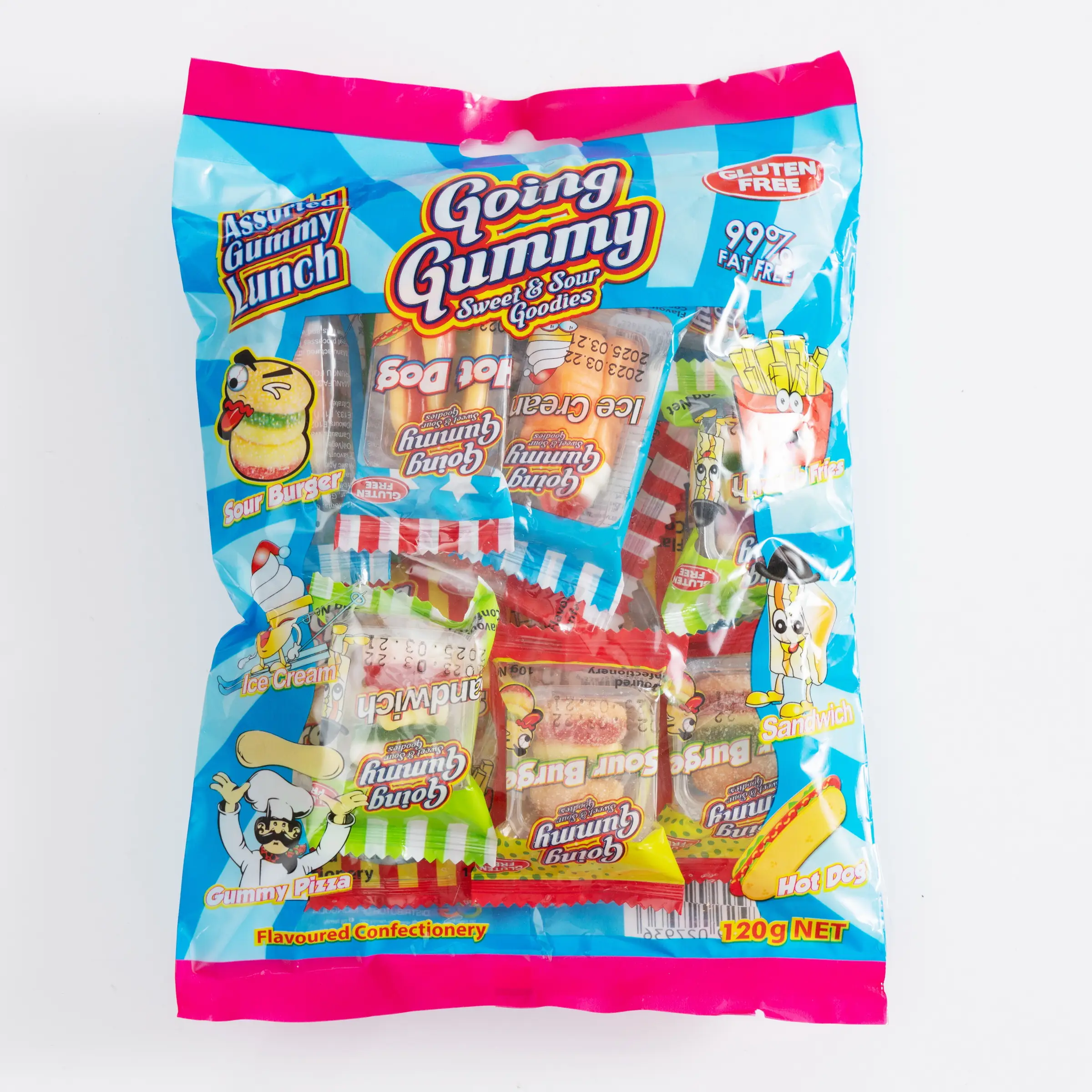
One available example is the 120g assorted gummy candy in the Hamburger Candy category. Buyers considering this format should verify the actual retail pack configuration, assortment details, and case specifications before calculating shelf prices. The supplied minimum order information lists 1,000 cartons and a carton description of 350g × 12 bags, which does not clearly match the 120g product format. We would clarify this discrepancy with the supplier before placing an order rather than treating the figures as interchangeable.
Assess Supplier Reliability Beyond the Quotation
Price comparisons are useful only when suppliers can deliver the agreed products and quantities within the required schedule. Buyers should examine production capacity, order confirmation procedures, communication speed, quality-control practices, and the process for handling shortages or defects. These operational details can influence the workload of supermarket purchasing and warehouse teams long after a contract is signed.
A dependable wholesale candy supplier should be able to explain how product specifications are maintained between production batches. Buyers can ask whether samples are available, how changes to ingredients or packaging are communicated, and what documentation accompanies shipments. Written agreements about acceptable specifications and corrective actions also make it easier to resolve disputes objectively.
Supply continuity matters when a product performs well in stores. Before scaling an order, purchasing teams should understand typical production and transit times, seasonal capacity constraints, and how replenishment requests are handled. Maintaining clear communication and realistic delivery schedules helps stores avoid unnecessary gaps on shelves, while backup options can reduce dependence on a single product or source.
Conclusion
Strong supermarket sourcing depends on more than securing an attractive quotation. Buyers need a clear understanding of customer demand, total acquisition costs, product compliance, packaging, and the supplier’s ability to support replenishment. At HAPI, we view practical product information and transparent purchasing discussions as valuable parts of building workable confectionery assortments.
Whether evaluating novelty sweets or everyday favorites, supermarket teams can make better decisions by validating specifications, testing demand at a manageable scale, and using real sales data to guide future orders. A disciplined approach helps retailers balance variety with financial control while creating a candy selection that remains relevant to their customers.