Two gummies can share the same fruit name on the package yet differ considerably in ingredients, taste, and labeling. The key distinction lies in how the fruit character is created: some formulations use fruit juice or juice concentrates, while others rely primarily on added flavorings.
Understanding these differences helps buyers evaluate fruit juice gummy products more accurately, ask suppliers the right questions, and align product specifications with consumer expectations. At HAPI, we believe informed decisions start with understanding what a product contains rather than relying on its name or appearance alone.
Understanding the Difference in Ingredients
Fruit juice gummies may use juice or juice concentrate as part of the formulation. These ingredients can contribute fruit-derived sugars, acidity, color, and flavor, although their actual contribution depends on the type and quantity used. Their presence does not automatically mean the finished candy contains a high proportion of fruit.
Fruit-flavored gummies, by comparison, can obtain their characteristic taste from natural flavors, artificial flavors, or a combination of flavoring ingredients. The formula may also include sugars, gelling agents, acids, and colors to achieve the desired sensory profile. This approach can provide greater flexibility when developing flavors that remain consistent across production batches.
Ingredient lists offer a more reliable basis for comparison than front-of-pack wording. Buyers should ask suppliers to clarify the type of fruit ingredient used, its role in the recipe, and whether the product contains measurable fruit juice. For fruit jelly candy manufacturers, transparent specifications make it easier to distinguish between products with similar names but different compositions.
Comparing Flavor, Sweetness, and Acidity
Fruit juice can contribute a combination of sweetness and acidity, depending on the fruit source and concentration. However, processing may alter delicate aroma compounds, and the final taste still depends on the complete formulation. A juice-based recipe may require additional flavor adjustment to achieve the intended fruit identity.
Added flavorings allow formulators to target specific sensory characteristics, such as the aroma of ripe strawberry or the sharpness associated with citrus. The resulting flavor can be vivid even when little or no juice is present. Neither approach is inherently better; the suitable option depends on the intended taste, ingredient preferences, cost constraints, and labeling requirements.
Sensory testing should compare samples under the same conditions. Buyers can assess aroma, sweetness, acidity, aftertaste, and flavor persistence rather than judging the product by its first impression alone. Blind testing may also help reduce the influence of packaging or flavor-name expectations when deciding which formula best fits the target market.
How Fruit Ingredients Affect Texture and Stability
Fruit ingredients can influence more than taste. Juice and concentrates contain varying amounts of water, sugars, and acids, all of which may affect the behavior of a gummy mixture. Changes to these ingredients can alter solids content and gelling conditions, so a recipe developed with one juice source may not behave identically when another source is substituted.
Gelling agents also determine the candy’s structure. Gelatin and pectin respond differently to processing conditions, and acidity can be particularly important in pectin-based formulations. Developers need to evaluate the interaction between fruit ingredients and the chosen gelling system rather than treating each component as an independent element.
Storage testing provides another important comparison. Changes in moisture can affect firmness, stickiness, and shelf stability, while flavor and color may also shift over time. Buyers should request relevant shelf-life data for the actual formula and packaging combination instead of assuming that juice-based and fruit-flavored gummies will behave identically.
Reading Labels and Evaluating Product Claims
Terms such as “fruit,” “fruit juice,” and “fruit-flavored” communicate different information, but their legal interpretation varies by market. Buyers should check the applicable food-labeling rules before approving claims about juice content, natural ingredients, or nutritional benefits. Marketing language should match the actual formulation and supporting documentation.
The ingredient declaration is a useful starting point, but it may not answer every purchasing question. Requesting the product specification, allergen statement, nutritional information, and details about the source of flavorings can provide a fuller picture. Where juice content is a key selling point, buyers should ask for evidence supporting any stated percentage or related claim.
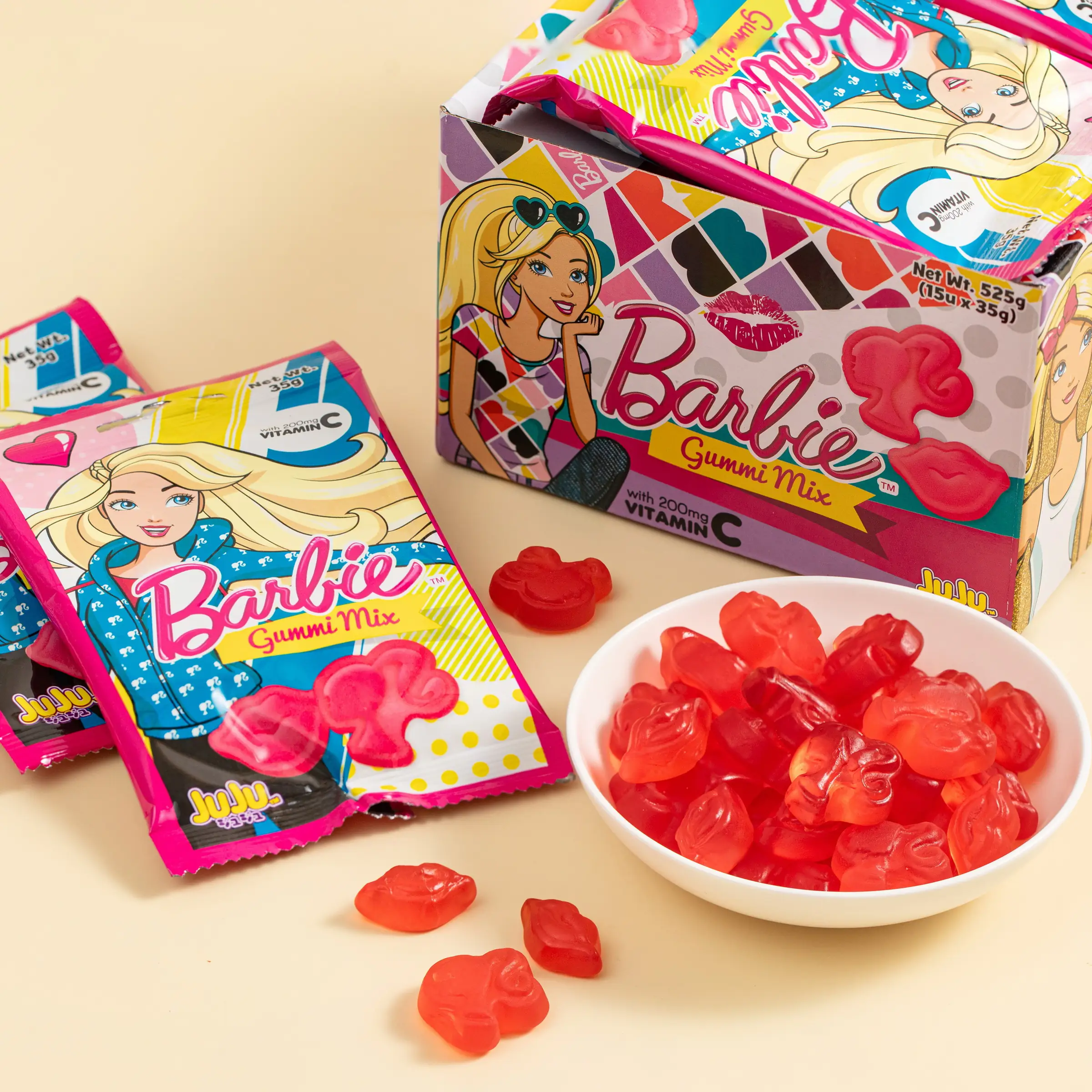
Vitamin enrichment introduces another consideration. For example, our Barbie Gummy with Vitamin C is listed with both OEM and ODM options accepted. Buyers interested in this type of product should confirm the vitamin form, quantity per serving, stability during processing and storage, and the applicable rules for nutrient claims before finalizing the label.
Conclusion
Choosing between juice-based and fruit-flavored gummies requires attention to ingredients, sensory performance, formulation stability, and labeling obligations. Fruit juice may contribute characteristics beyond flavor, while added flavorings offer another route to a defined and repeatable taste. The right decision depends on the product’s purpose and the evidence available to support its specifications.
At HAPI, we encourage buyers to compare formulas through documented ingredient information, controlled sensory trials, and clear quality requirements. With these checks in place, fruit juice gummy products can be evaluated on their actual composition and performance rather than on marketing language alone.