The first bite of a fruit gummy sets an expectation that every piece in the bag should meet. Maintaining that familiar taste across production batches, however, requires careful control of fruit ingredients, sweetness, acidity, and processing conditions. A fruit juice gummy may contain ingredients whose natural composition varies by source or season, making formulation more complex than simply adding juice to a candy base. At HAPI, we view flavor consistency as the result of deliberate ingredient selection, repeatable measurements, and ongoing product evaluation.
Selecting Fruit Ingredients With Consistent Characteristics
Fruit juice and concentrates can contribute aroma, acidity, color, and naturally occurring sugars, but their composition differs across fruit varieties and suppliers. Even deliveries from the same source may show changes in soluble solids or acidity. Formulators need to understand these differences before deciding how much juice to use in a recipe.
Supplier specifications provide a useful starting point. Information about soluble solids, acidity, color, and ingredient composition helps developers compare incoming materials against established targets. When a delivery falls outside the expected range, testing can determine whether the recipe needs adjustment or the ingredient requires further review.
Flavorings may also be used to reinforce the desired fruit profile. Their purpose is not necessarily to replace juice; depending on the formulation, they can help maintain a recognizable aroma when the fruit ingredient varies. Fruit jelly candy manufacturers should evaluate the combined effect of juice, flavorings, acids, and sweeteners instead of assessing each ingredient in isolation.
Balancing Sweetness and Acidity
Sweetness shapes how consumers perceive fruit flavor, but increasing sugar does not always make a gummy taste more fruit-like. Excessive sweetness can obscure delicate aromas, while insufficient sweetness may make acidic flavors seem harsh. Formulators must find a balance suited to the specific fruit profile and intended audience.
Acidity affects both taste and processing behavior. Citric acid and other permitted food acids can provide brightness, but the required amount depends on the ingredients and gelling system. Because acidity may also influence how the gummy sets, recipe adjustments should be evaluated for both sensory quality and physical texture.
Controlled tasting helps translate these relationships into practical decisions. Samples can be compared for sweetness, tartness, aroma intensity, and aftertaste using consistent portions and evaluation conditions. Rather than relying on general impressions, development teams can record specific sensory differences and use them to guide the next formulation trial.
Controlling Flavor During Cooking
Heat exposure can change the aroma of fruit ingredients. Some volatile compounds are sensitive to elevated temperatures, and prolonged heating may weaken the fresh character that was apparent in the original mixture. Cooking conditions therefore need to suit the recipe, equipment, and desired flavor profile.
The order in which ingredients are added can also influence the result. Certain ingredients may tolerate the main cooking stage, while others may require different handling to preserve their intended characteristics. Any change to the addition sequence should be validated against food safety requirements and the performance of the finished gummy.
Consistency depends on recording more than the final cooking temperature. Batch size, heating duration, solids content, and mixing conditions can all affect the outcome. Fruit juice gummy production benefits from defined operating ranges and documented checks, giving operators a practical way to investigate flavor differences between batches.
Adapting Formulations to Commercial Production
A recipe developed in a small vessel may not behave identically in industrial equipment. Larger batches can heat unevenly, and mixing patterns may affect how uniformly the juice, flavorings, and acids disperse. Pilot runs help identify these differences before the formulation moves into regular production.
Ingredient dosing deserves particular attention during scale-up. Small errors in the quantity of a concentrated flavor or acid may have a noticeable effect on the final taste. Calibrated weighing equipment, clear batch instructions, and independent checks for critical ingredients can reduce avoidable variation.
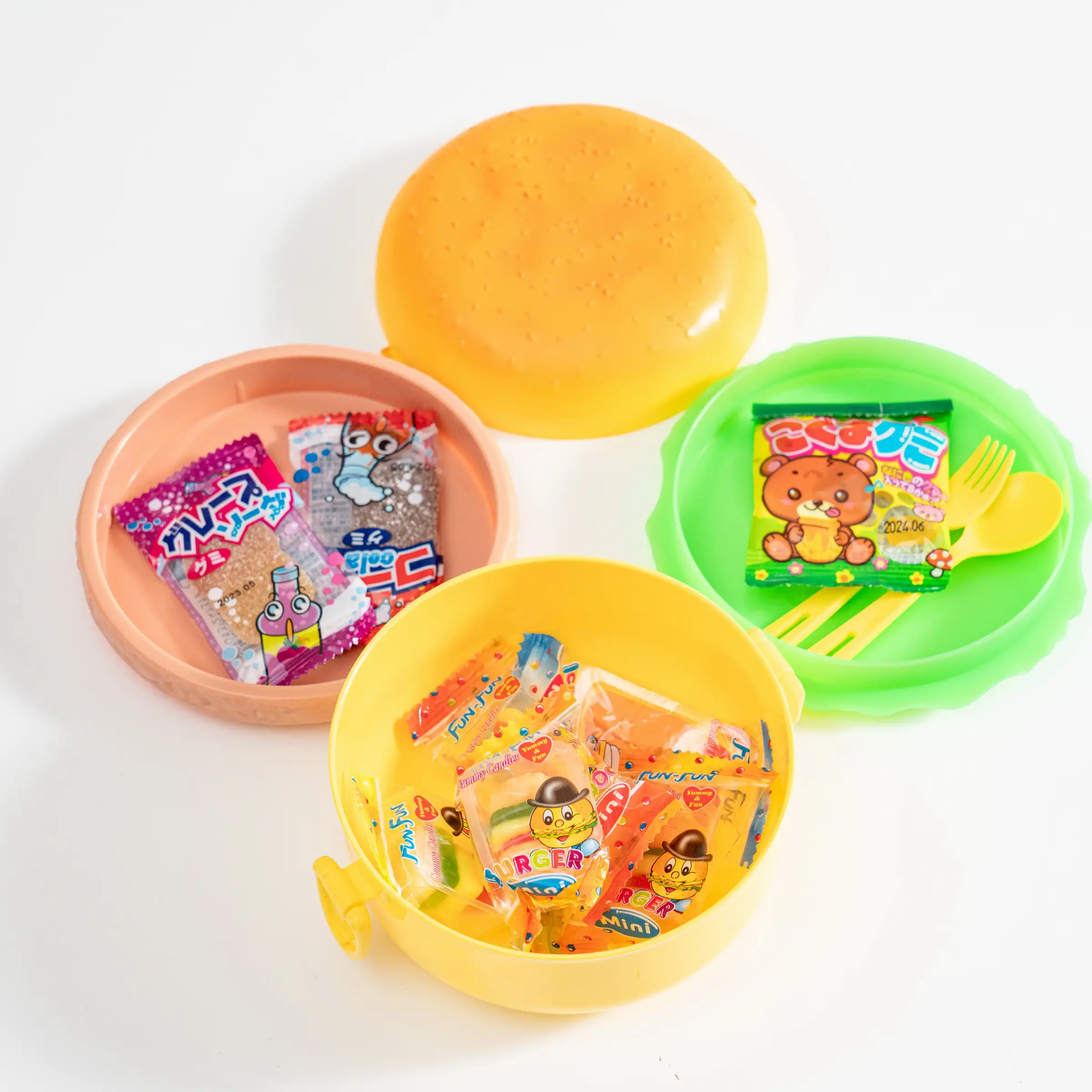
Product format also influences how a formula is delivered to consumers. Our burger-shaped box-pack assorted gummy is listed at a net weight of 350g per bag, with 12 bags per carton. For this type of assortment, buyers should clarify how the flavor range is divided across the pack and how each flavor is checked for consistency, rather than assuming that one general sensory assessment represents every variety.
Testing Flavor Stability During Storage
Freshly produced candy does not always retain the same flavor throughout its shelf life. Moisture movement, exposure to oxygen, temperature fluctuations, and packaging properties may affect aroma, texture, and overall sensory quality. Testing should therefore cover the intended storage period rather than focus solely on samples taken immediately after production.
A practical evaluation plan uses defined storage conditions and scheduled inspections. At each interval, testers can assess aroma, sweetness, acidity, color, and texture against an approved reference sample. Recording the results helps distinguish gradual changes from isolated production defects.
Packaging should be assessed alongside the formula because it forms part of the product’s storage environment. Seal integrity and moisture-barrier properties may influence how well the gummy retains its intended characteristics. Fruit jelly candy manufacturers can use shelf-life results to review ingredient choices, processing settings, and packaging suitability before making commercial commitments.
Conclusion
Reliable fruit flavor comes from managing a network of variables rather than adjusting one ingredient in isolation. Consistent raw materials, balanced sweetness and acidity, controlled heating, accurate dosing, and storage testing each contribute useful evidence about the finished product. At HAPI, we approach formulation as a process of measurement and refinement, using clear specifications to guide decisions from early trials through commercial production. With these controls in place, a fruit juice gummy can retain a more recognizable flavor profile across batches and throughout its intended shelf life.